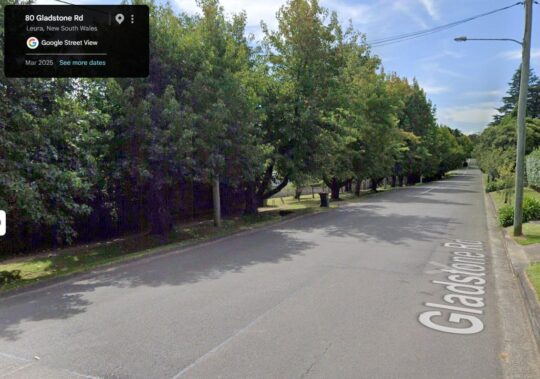
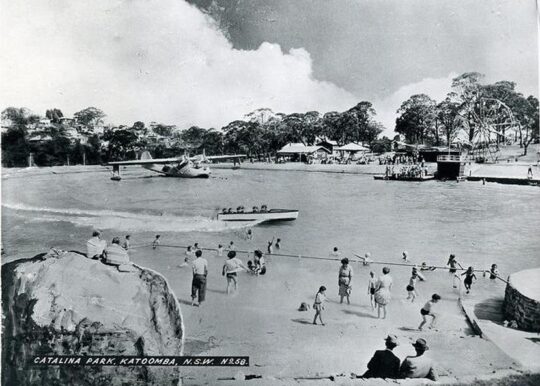
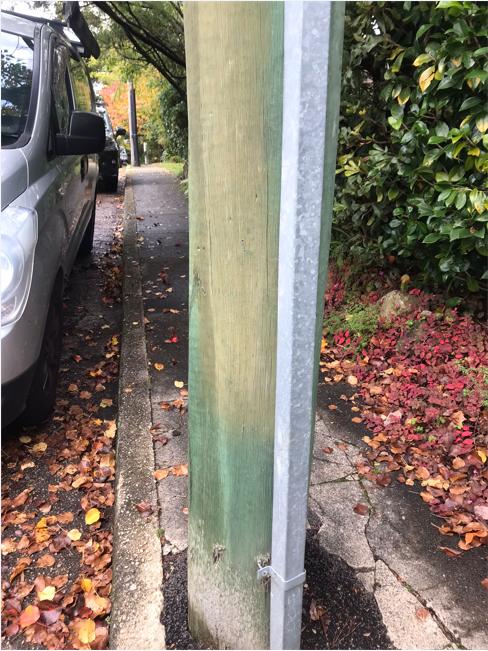
It was Thursday 9th July 2026: Endeavour Energy’s Asplundh driver vandalism in the Australian Blue Mountains in ‘The Gully’. This is Asplundh’s “Historic Tree Management Clearance”…any tree planted over 10 years ago is fair game to us!” (All behind that elephant in the footpath).
As if our Katoomba Falls Creek Valley (The Gully) in the Blue Mountains of Australia hasn’t copped enough callous deforestation over the many decades?
We previously copped Blue Mountains Council’s outsourced ‘JJ Richards‘ garbage truck meathead that had drove through our verge, then Council’s verge police, now its Asplundh’s meathead lumberjacks taking a crack at us. WTF!
Last week some Kiwi ‘bevan’ wantonly killed our verge ornamental autumnal pear tree. Was he on the turps?
T’was our beautiful front pear tree, loved mutually by our neighbours for such autumnal folliage; similarly valued by car visitors to the Blue Mountains for its deep tree shade providing shaded parking from the hot afternoon sun. The only tree in our small street to offer such.
We called our pear tree ‘Russet‘ (after the French pear variety) for its beautiful leaf colouring through autumn and its gift of recurring growth back to us providing us with hedge privacy, summer shade and attractive autumnal folliage.
One planted our tree back in 2002. One nurtured it, watered it, yes had it duly trimmed every six months to safely stay growing below the electric overhead power lines above. We acknowledged and accepted the tree’s height trimming with Origin Energy then Endeavour Energy every six months amicably since 2012. That’s our initiated agrement for the past fourteen years.
Our planted oramental pear tree, one planted as a sampling in 2002, provided us privacy, the only shade in oursmall street for visitors cars from the hot summer sun, seeds to native birds, roosting, a possum nest. It became part of our addition to our heritage streetscape in The Gully.
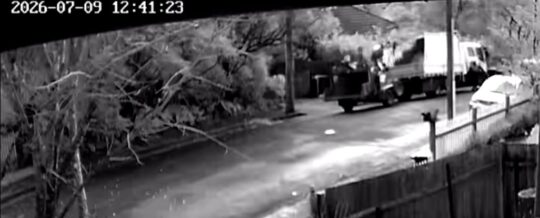
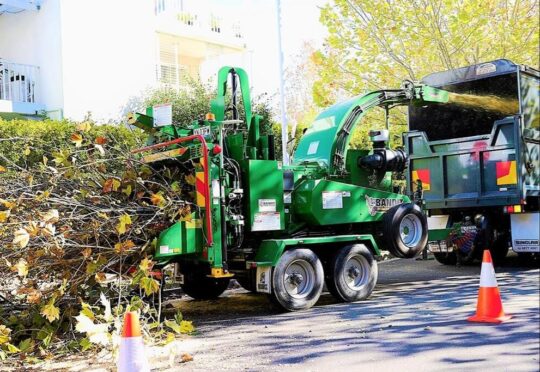
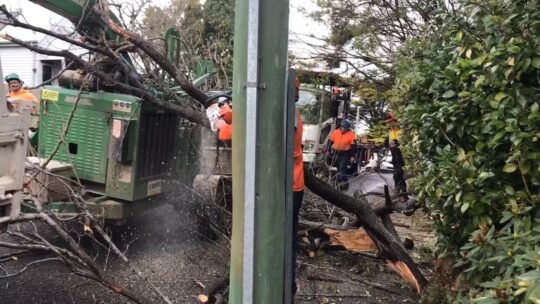
But Russet’s now dead; killed by Asplundh’s meathead driver and they quickly dismembered it and all evidence in their Asplundh’s Bandit woodchipper…
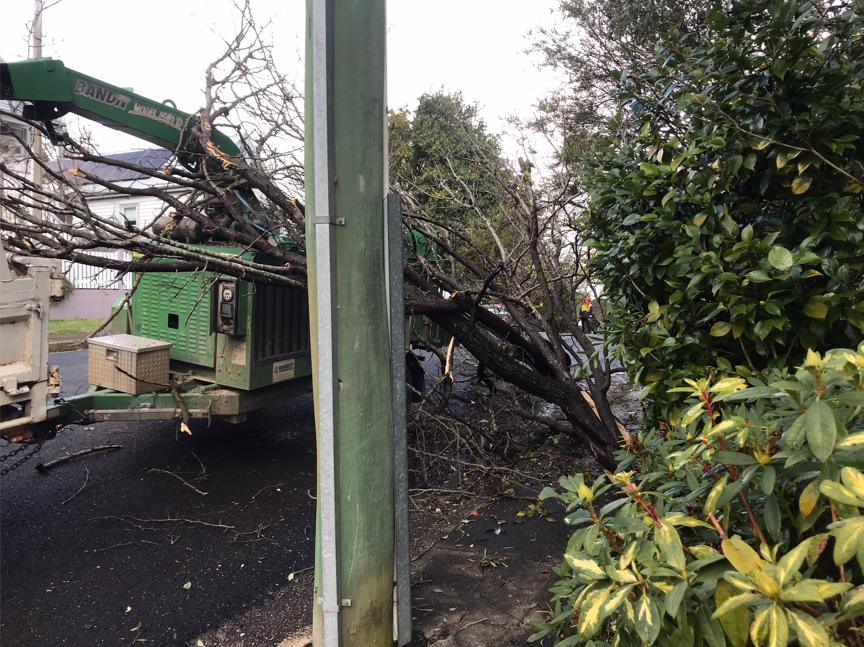
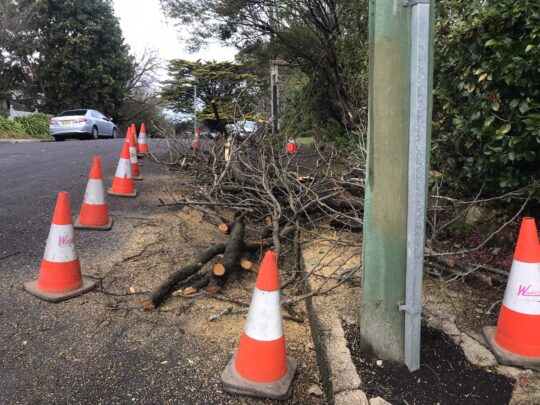
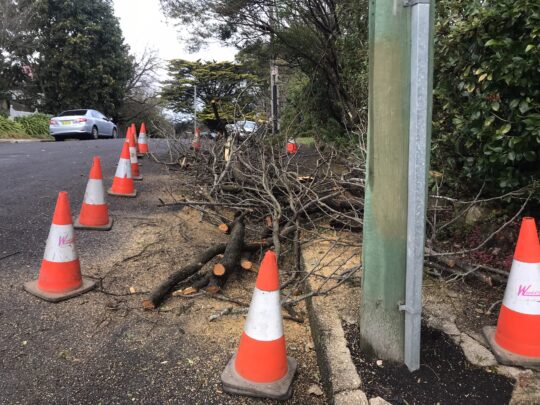
Asplundh’s meathead terror attack entrails of our killed pear tree. What Asplundh left us behind.
Lumberjack Asplundh’s meathead vandals wantonly attacked our property last week causing substantial malicious damage. Some Kiwi driver in the trimming crew driving the Asplundh truck came back after the power line trimming job to reverse hard back into where he had been crashing with deliberate force into our 25 year of old Pear Tree, taking it out completely. WTF?
The image above and below show the extent of that wanton damage. Of course the property owner didn’t ask for such proprty damage. The property owner had planted this pear tree back in 2002 over quarter of a Century ago and has diligently maintained it to comply with Endeavour Energy’s tree clearance rules ever since. Such overhead power lines clearance arrangement had all been amicable up until 12:45pm on Thursday 9th July 2026.
On Thursday 9th July 2026, NSW Government’s outsourced electricity provider Endeavour Energy decided to get its Swedish lumberjack ‘Asplundh’ to do its ‘tree trimming’ so-called.
This round it had its New Zealand backpacker boofheads do the job on the property.
The Asplundh damage that had nothing whatsoever to do with powerline clearance after the fact. Perhaps the Kiwi feral leprechaun caught some corner-of-eye glumpse of our resident native possums. Native to Oz, we feed ’em and house ’em!
When will the electricity be installed underground? That would have obviated the need for tree trimming entirely. Indeed, we did so back in 2013 – both power and phoneline as can be partially seen in the above image of the galvanised steel cover down the pole. So providing us with no above-ground wiring from the street to our property. That effort cost us over $6000 at the time with a qualified Ausgrid contractor. It’s called proper planning.
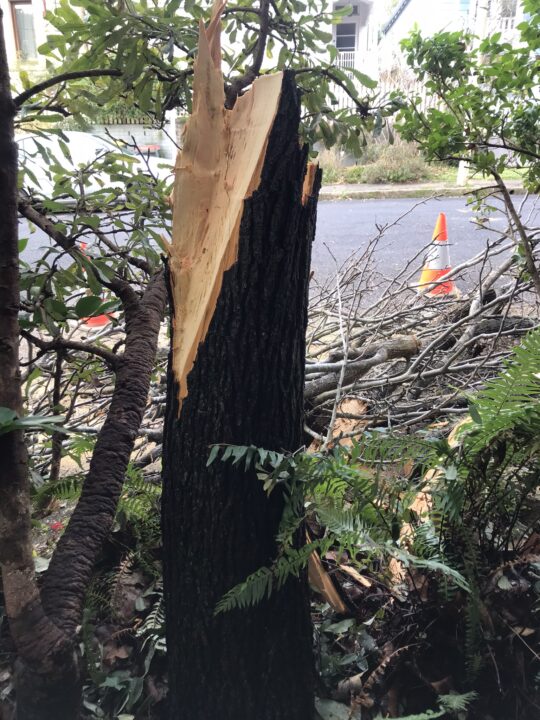
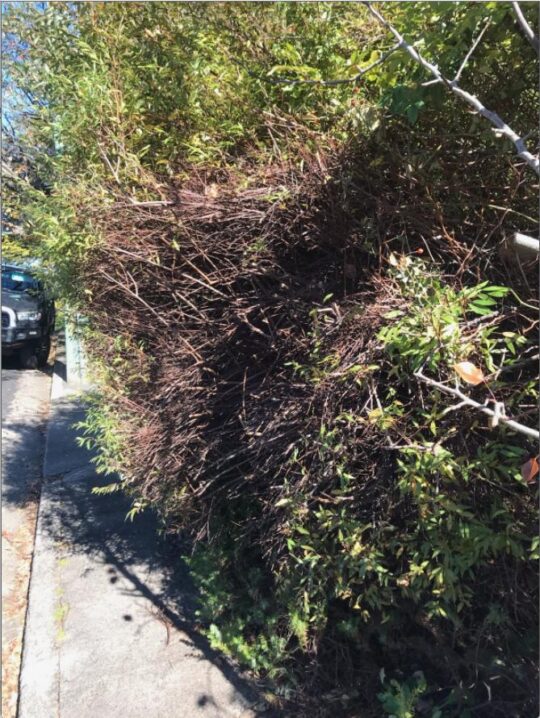
So, after the Endeavor Energy vegetation timming job had been done by Asplundh, its Hi-Viz ranga leprechaun (some imported Kiwi backpacker) came back and deliberately reversed his truck into our verge and took out a mature tree completely. This is the damage – entire tree killed! Wham bam!
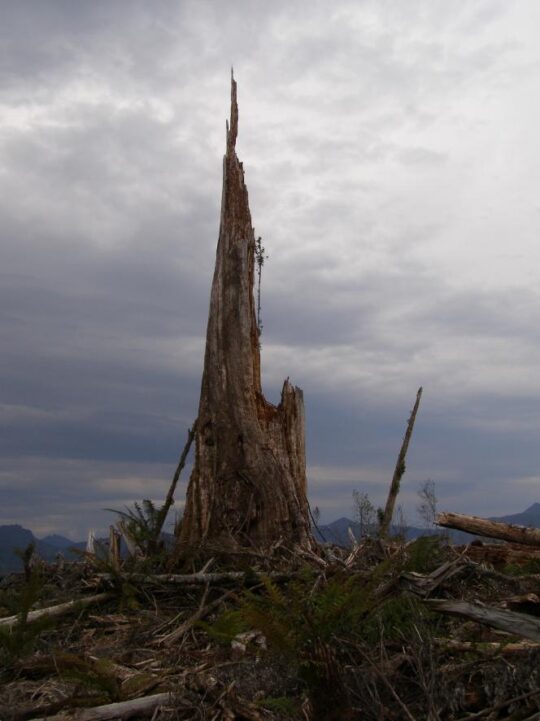
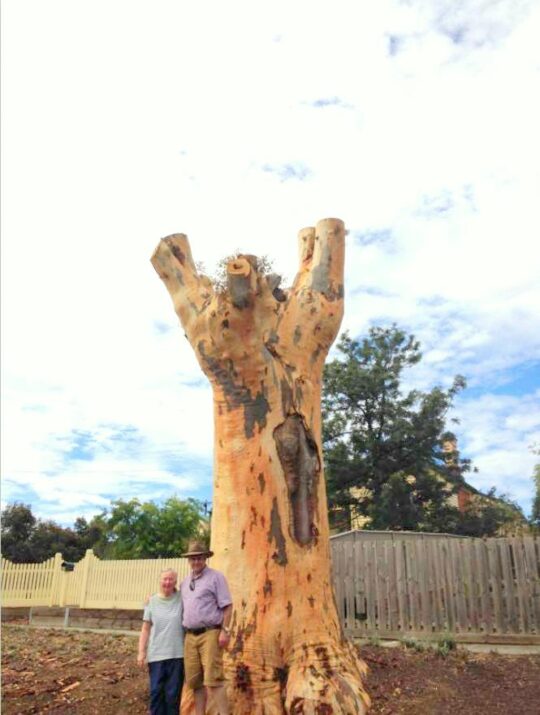
WILLIAM LOWE’S BURJ KHALIFA SHARD – so wanton hate-inflicted upon Katoomba by a wayward tattoed immigrant. It was but a healthy tree deliberately sharded by one reversing truck crashed into by an Asplundh hatefilled ethnic. An unqualified foreign driver? A deliberate wanton criminal attack! Did the All Blacks lose a recent match against the Wallabies or something? One doesn’t follow the cross ditch contest despite having experience life in NZ a few times but felt best to return to the land of lots of sandy beaches, cuz.
This shard image resonated. I have personally onsite witnessed the holocaust of Tasmania’s Stix Valley ancient giants first hand back in 2011.
Photo by Editor on one’s investigative trip to Tasmania’s Stix Valley Holocaust on 28 September 2011; an excursion lead by celebrated Tasmanian Naturalist Photographer Alan Liesham. This shows grotesque slayed carnage by an antiquated anthropocentric lumberjack cult driven by pure hate. ^https://www.wildtasmania.org/
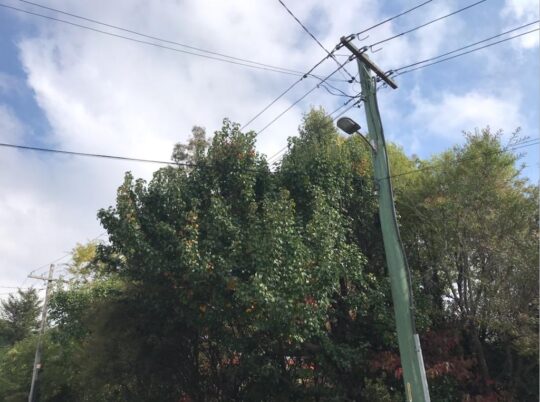
Reforestation: On right of verge: our overhanging ornamental pear tree ‘Russet’. This was before an Asplundh meathead truck driver reversed into it killing it recklessly and deliberately. We had planted it way back in 2002 and nurtured it seasonally, maintained it, trimmed it and swept up its autumn leaves annually. Sadly, it’s now no more and Asplundh has left a gaping hole.
Our verge in full bloom. Nurtured for 25 years, but now gone forever!
This valley pre-colonisation, actually used to be a rainforest pre-John Britty North’s deforestation of the 1870s. So, one terms what we did on our wee patch by first removing all the grassed lawn on the property is our wee gesture of reforestation. We’ve certainly observed (and heard) more native birdlife being appreciative.
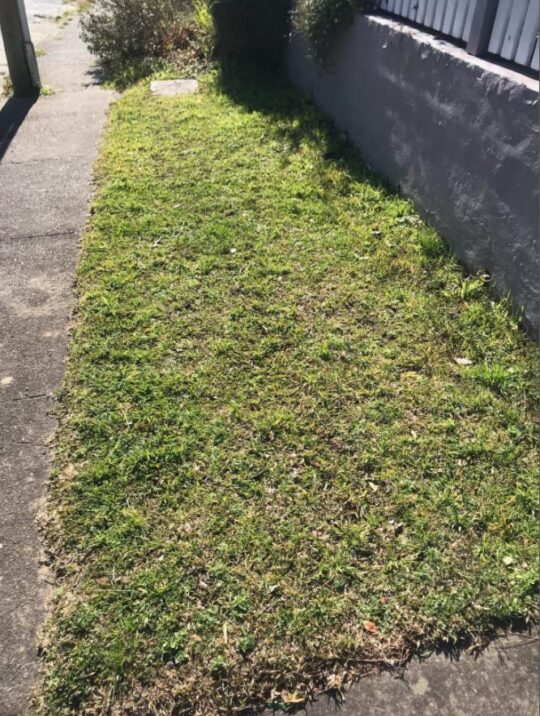
The following image shows a similar example of what we started with:
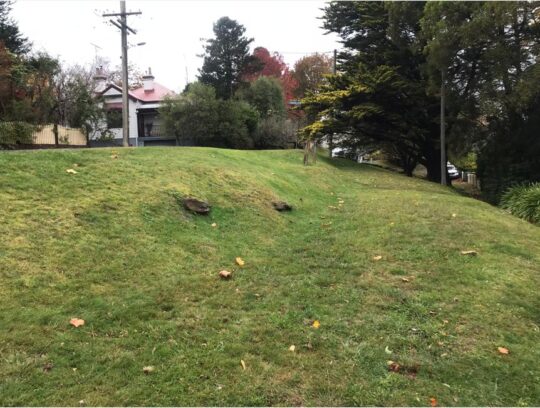
A typical Blue Mountains Council verge which Council never maintains (mows), expecting residents (ratepayers) to do its toil – time and cost.
Back in 2002, one contacted Council about its unkemp grass verge out the front of our place to propose we replace the grass with native plants and they had no issue. Ok, good. So, for this 16 metre verge length of about 1 metre wide (inside from the footpath mind you against our front boundary) we set about removing all the grass down to the roots, digging up the compacted soil and improving it, and adding soil to a raised level, then planting as many ferns shrubs and a few trees as would be allowed as ‘reforestation‘. Better than deforestation.
But just at a coppice scale, given that the property’s block area is under a quarter of an acre. We just did our bit to give back to local Nature and enhance the natural landscape.
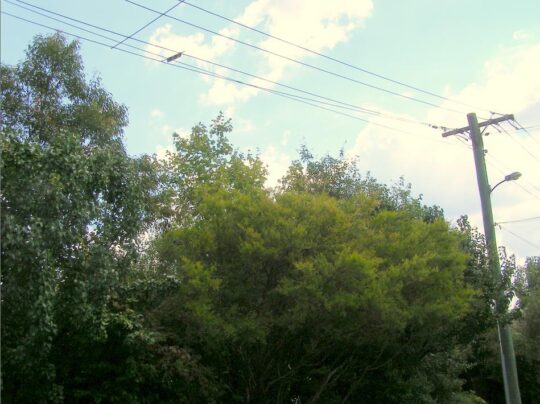
Had those bloody imposing and overruling overhead wires instead been better installed along the other side of the street (where there are no trees to speak of), or even better, installed underground (given we are in a bushfire risk zone), then this pear tree after 24 years would have grown by now to over 30 metres high. It would not just shade one’s property, cars in the street, but most of our street. Such were the dumb infrastructure planners of the day. The property also wouldn’t have that super bright street light.
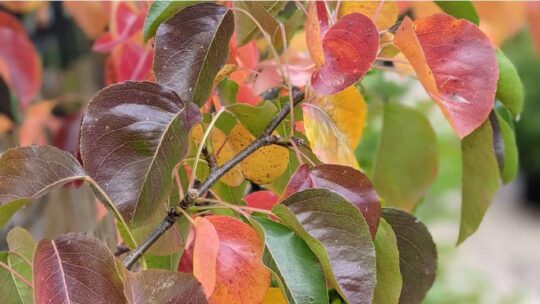
Our precious ornamental pear tree (Pyrus calleryana ‘Chanticleer’) – before Asplundh killed it.
With a wide spread of up to six metres, and a more conical shape, the Chanticleer (Pyrus calleryana) means proud strutting rooster. It is one of the most popular ornamental pears in cultivation in Australia. Its leaves are dark green, foliage dense, provides habitat for native birds and other wildlife. It also provided spectacular autumn foliage in shades of gold, plum, and burgundy. Chanticleer (also known as the Cleveland Select Pear) typically grows to a mature height of 8 to 12 metres (26 to 40 feet). It is a hardly cool climate species, featuring a distinctive, narrow, and upright teardrop shape, spreading about 4 to 6 metres wide at maturity. These ornamental pears are prized for tight spaces and streetscapes due to their naturally uniform, dense habit.
In addition to their height, such ornamental pear trees typically grow moderately fast; and once established they can add 50 to 80 cm per year.
Pear trees provide seasonal benefits – producing masses of small white flowers in spring; dense deep green foliage for summer shade; vibrant yellow, orange, red and burgundy coloured foliage in autumn. Russet had been planted in well drained sandy loam. It was one of six of the same variety planted by three adjoining neighbours in a row, two in front of each of the three properties. The verge coppice hedging had sensibly replaced Council’s grass that Council insisted owne mow regularly at owner’s time and expense bizarrely as a ratepayer service to Council. Shoe on the wrong foot or what?
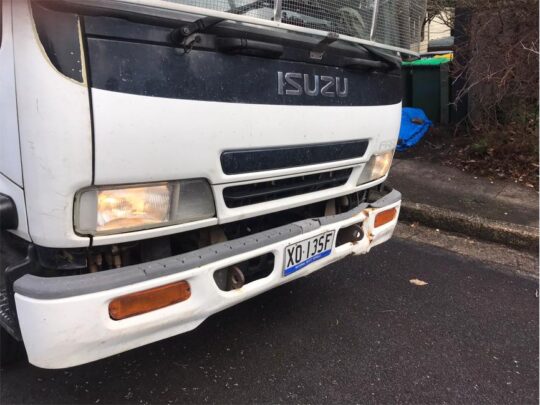
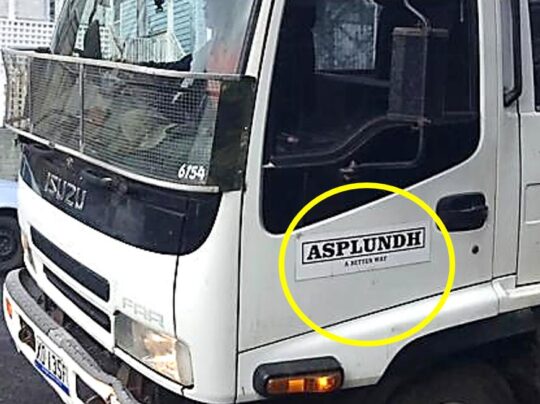
Then Asplundh and its immigrant backpacker meatheads came along in July 2026. Some folks just hate trees. It’s probably why this mob operate in the leafy Blue Mountains – like “how many trees can we kill today?” mentality. This was the offending truck:
The Asplundh truck of the culprit – Rego: ‘X0 135F‘. The ‘F’ being for what? Fuckwit!
And towing on the rear the industrial strength tree chipper:
The website states:
“Meet the Bandit 21XP – Your Unstoppable Chipping Solution Tackle the Toughest Jobs with Ease Imagine effortlessly handling the largest, toughest materials with the Bandit 21XP. Its 21” capacity and 26” x 24.5” .
One doesn’t have to be too smart to drive a truck. This author holds many ‘driving’ licenses so oughta know – like a HC (semi-trailer) license, authorised bus driver licence (including double deckers), UPPL (unrestricted private pilot licence), CPL (commercial helicopter licence), low level flying endorsement (R22), commercial coxwains ticket, also for a motorbike, forklift and oh yeah a car licence – manual even! All unblemished.
One does not hold a chainsaw license on principle, but it oughta not be too hard to work it out (see video below on how to start a chainsaw). Yet I wouldn’t let a ranga leprachaun near one or near another truck for that matter.
Endeavour Energy (the current powerline operator serving the NSW Government) should wisely consider discontinuing to associate with Asplund for its vegetation trimming. It’s not been the first time in our experience over 26 years here.
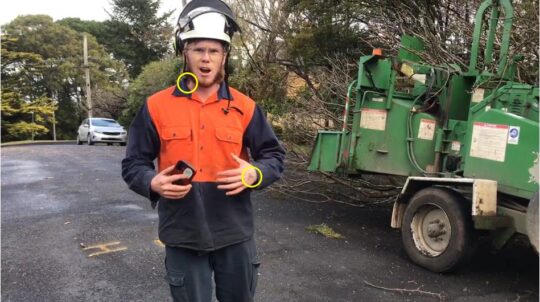
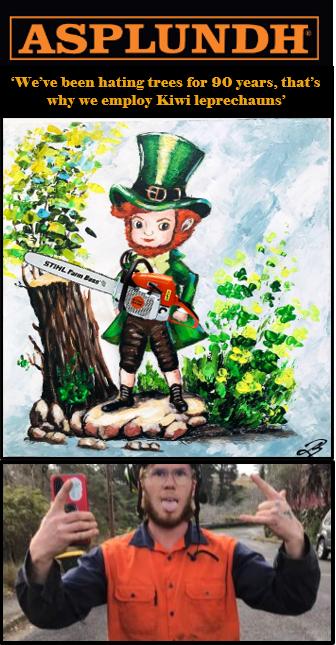
Asplundh’s hi-viz meathead driver who reversed the truck into the owner’s large tree. A New Zealand ranga leprechaun attempting some Māori haka taunt (cultural misapproriation) – not too bright here, ridiculous actually and he ought pull his tongue in and go back to N.A.F.A. land! [Asplundh-anställd på Nya Zeeland – tatuerad leprechaun – vandaler]. Is that why he ran from NZ!
A piss poor effort. Aotearoa Māori may well treat such cultural ridicule satirised by disrespectful clearly non-Māori with due contempt – cultural misapproriation? Up to Māori. The uniform ties and corporate badges suggest corporate inebriation.
BTW, that rego plate X0 135F – probably the ‘F‘ duly stands for fuckwit. The Kiwi leprechaun would typically hate Aussie native possums and therefore Australians. So why is he here in the first place across the ditch causing havoc downunder? Perhaps Australian could exchange him with Grafton’s Brendan Tarrant of Christchurch notoriety in hatred. Thus Brendan would fly back to OZ on QANTAS, and this Kiwi ranga leprauchaun skedaddle deport back to the long white cloud on AirNZ to continue his passion for deforestation on his home turf?
Problems across the ditch? Good Kiwis deserve to stay downunder, but feral Kiwis deserve go back across.
Asplundh’s Kiwi ranga leprechaun all tatooed up and with attitude. Has he served time? Do Australian police know he is in our country and of his background?
Asplundh – “A Better Way“?
And all this drama rocked up within juts a month after Blue Mountains Council’s wheelchair access dictat effort…
Frankly, is it no wonder why we despise government in all its guises, corporatised or otherwise?
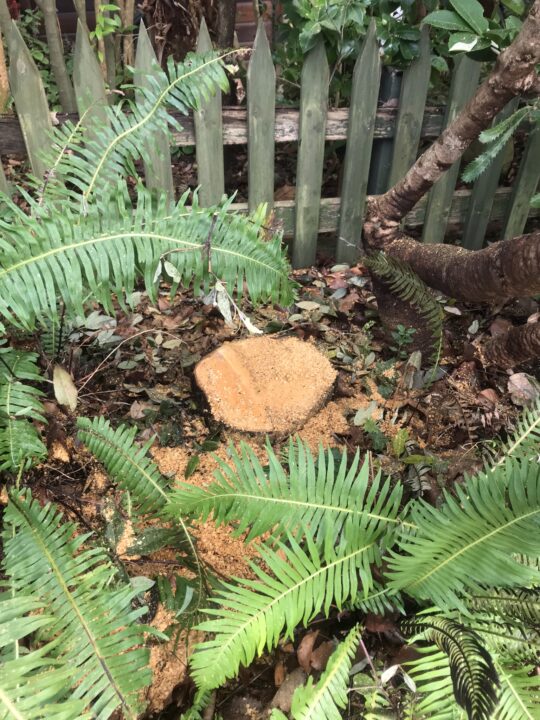
Then the coward contractors returned later that night and chainsawed the evidence… except the property owner had captured it all.
Healthy pear tree chainsawed to the ground trying to remove all the evidence of the crime. It was 25-years-old, planted by the property owner back in 2002. The diameter of that stump measures 30 cm. What a bloody tree-hating lopping meathead!
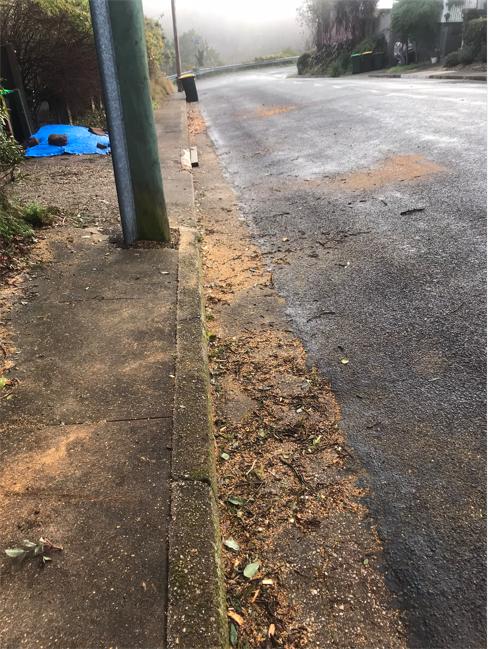
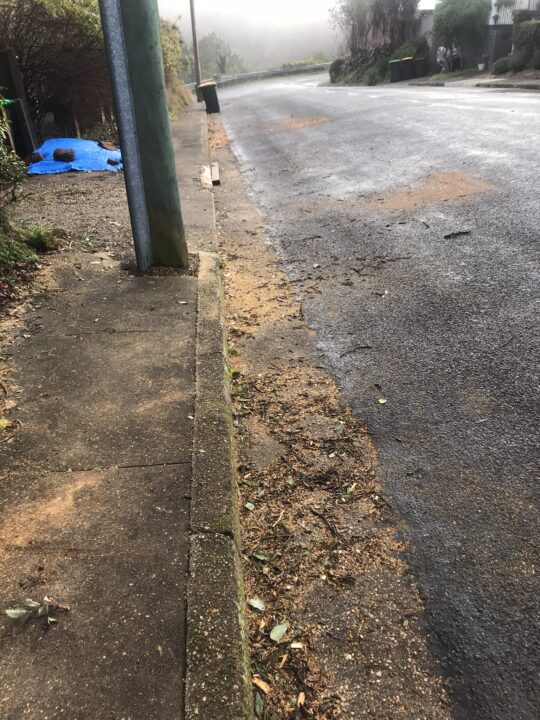
The Pear Tree’s chainsawed entrails found next day (Friday 10th July 2026) left behind by Asplundh vandals secretly from the night before left strewn along the street. Wham bam thank you ma’am?
This malicious vandalism comes just a few weeks after the owner was harassed by Blue Mountains Council bullies about this same verge.
Blue Mountains Council and Endeavour Energy’s Asplundh simply don’t deserve to belong anywhere near the Blue Mountains world heritage, but back in the CITY.
Where we live and respect. We’ve lived here for 26 years, to date.
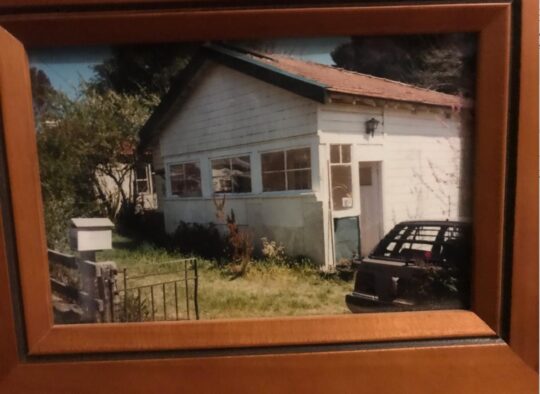
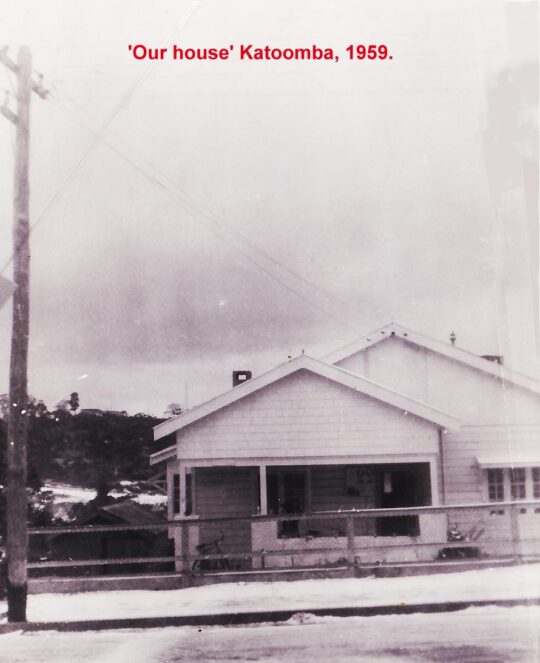
This was our house originally:
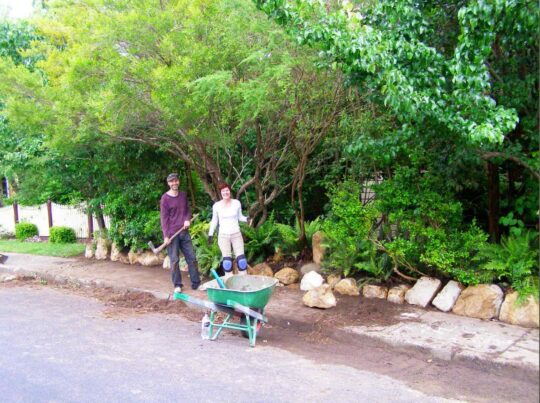
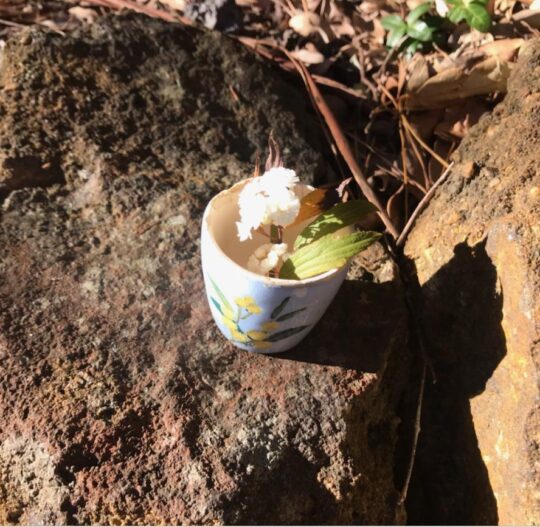
Our grass verge reforesting landscaping upgrade of 2015. Left: Our neighbour mate Shaun Dayson ‘Pocket Gardener’ contracted for the hard labour required for the bought native standstone rocks setting by us. This a work in progress then. Happy times remembered well.
Sean Rowe:
Postscript:
Since the date of this Asplundh Truck Crash into my property, Katoomba Police have served me with Court Attendance Order. WTF?
“And the people came shouting, “What’s this all about…?”
They looked! And they stared with their eyes popping out.
Then they cheered and they cheered and they CHEERED more and more.
They’d never seen anything like it before!
My goodness! My gracious! they shouted. “MY WORD!
It’s something brand new!
IT’S AN ELEPHANT BIRD!!
And it should be, it should be, it SHOULD be like that!
Because Horton was faithful! He sat and he sat!
He meant what he said.
And he said what he meant…
An elephant’s faithful, one hundred percent!”
SOURCE: ‘Horton Hatches The Egg’, children’s book by Dr Seuss, 1940.
References and Further Reading:
[1] Asplundh’s notice of trimming of vegetation to us, 2026-06-29, from our files,
[4] One’s formal complaint to Endeavour Energy in writing the very next day , 2026-07-10, it reads as follows:
“To whom it may concern,
Complaints Manager
Endeavour Energy
Level 40-42, 8 Parramatta Square
10 Darcy Street
Parramatta, NSW 2150
Dear Sir/Madam,
RE: Asplundh tree destruction at 5 Kundibar Street Katoomba NSW 2780
Your Complaint Ref: C-331040
Asplundh Job Ref: AA358396
I refer to my telephone call to your Complaints department yesterday.
Yesterday (Thursday 9th July 2026), Endeavour Energy’s outsourced vegetation contractor Asplundh arranged with me to trim our verge vegetation clear of the overhead powerlines at our above residential address, to which I agreed and oversaw.
This arrangement has been mutually agreed between myself and Endeavour Energy since 2011 to occur roughly every six months and the arrangement has been amicable.
That was up until yesterday, when one of Asplundh’s cowboys drove into a mature tree of ours and destroyed it totally, and totally unnecessarily.
The trimming job yesterday had been performed between 11:30am and 12:30pm, and the task duly completed as I watched on. Then the Asplundh crew headed off to another location.
However, about 10 minutes later, I visually observed from my front home office window one of the Asplundh trucks reverse into my verge and completely knock over a large 25+ year old ornamental pear tree to the road leaving a 1 metre high severed stump. The tree’s truck diameter was just under 30cm! It was no small tree! I planted it 25 years ago.
I attach photos of the damage. I point out that the tree was in no way impacting the safe vertical area near the overhead powerlines. The trimming work had already been completed and this work has just previously been mutually confirmed with me happily by the Asplundh vegetation trimming supervisor onsite to his satisfaction. I had thus returned inside.
Upon seeing the tree fall across the street, I immediately raced outside to see the damage. The Asplundh truck driver (photographed) had exited his truck as I took photos and videos of the matter. The truck driver then questioned me and approached me in an aggressive manner on the street in front of his truck. I photographed and videoed him at the time at the damage senesce at the time only to be threatened by his aggressive behaviour toward me.
I asked why.
The Hi-Viz Asplundh crew laughed at me, stating it was only a tree. Yet, I was the victim. The truck driver was clearly in the wrong.
I have reported this malicious damage to Police, Blue Mountains City Council, Asplundh’s contact Calib, and to Endeavour Energy.
What has occurred is unacceptable and I have sought legal advice in relation to this matter. I now have engaged a solicitor.”
“You are actually lucky they left you a tree. On our land they just cut the trees off with 4 feet stumps and left everything. They are supposed to notify you ahead of time, but you basically have to be there chaining yourself to trees or they don’t care. National Grid would clear cut Sequoia National Forest if they had so much as an extension cord near the place.“
[7] ‘Did Asplundh damage trees on private property in Ross Creek?‘, by Jess Wallis, Ross Creek Community Group , 5 July 2025,
“Just wondering if anyone else in the area experienced issues with Asplundh trimming trees on their property subcontracted by Powercor for the powerlines? We had a number of trees on our property (not public land) cut directly off at ground level & also a substantial number of our advanced trees damaged from their careless behaviour when dropping branches.”
“I’m in Portland, Oregon (USA) and Asplundh were hired by PGE. They just came down our street and did a horrible job. I agree that the power lines need to be kept clear, but they absolutely butchered trees. They left stubs on the trees and took off branches that were no where near the lines. They also left a pile of debris in their wake. I am fuming right now.“
[9] ‘Asplundh was a bully‘, Go to legal (anonymous), 2024,
“I found a huge truck cutting a tree in my neighbors yard from my upper driveway. I was why they did not ask permission and he said its just the way we roll. I said you are in the wrong yard protecting your lines and dropping wood in my yard for me to clean up from my neighbor’s tree. You got 20 minutes to clear out. They ignored me. I decided I need to move my automobiles to the upper drive way and just went back inside, i do that often just to coat the cylinders with oil.
Moving the story forward the electric cooperative arrived and told me i was interfering. I explained what he did not know and added that they were over 10ft outside out the 20ft of access they have to maintain the lines. I said wait there’s more. Look next to the cut tree see the rotten tree notice the top missing. the tree I am certain you came to cut had already failed and fell in my yard and i cleaned it up, These guys decided that they would still get paid by cutting down a perfectly solid tree in my neighbor’s yard at my expense. He said move or i will call the police. i said let me know when they arrive. Two cop cars and 3 cops arrived in short order and one said that i had kidnapped their equipment i told the story a third time. The cop said wait that tree is not on your land, i said right. They gotta clean that mess up before i budge. The cop left and spoke to them and i moved my car and they moved a lot of the waste but left a lot. I really made that electric guy mad. I never acted ugly, just stubborn as hell. Think i need a lawyer?”
[10] ‘Has anyone else had issues with Asplundh doing tree trimming for Duke Power?‘ by ‘LittleMissMeanAss’ (anonymous), 2023,
“Asplundh recently entered my property, which is fenced and gated, and cut down a 20+ year old tree without any notice or permission. I contacted their Garner office and left a message on their complaint line. Got a call back from a fellow who said he would go out and look at the tree in question. He calls back and says the tree was actually “a cluster of trunks that is classified as underbrush” and they’re within their rights to cut it down. I asked how that was possible when the tree was taller than the barn it was next to. He said that the trunk was not 12″ wide nor higher than 3′ (how would you know how tall it is when they took the whole thing down?) and therefore they didn’t do anything wrong and there was nothing else that could be done. The tree was taller than my barn. There are photos of it on Google Earth that show it all the way back to 2007, being at roof-line height. We usually trim it in spring to keep it cut back from the power lines ourselves. They had no issues topping two other trees that were actually growing around the power lines, but they chose to cut this one all the way down?
He also said that they left a doorhanger, but also kept insisting there was a house on my property. There isn’t a house. It’s a farm. “Well, maybe he left it on your gate and it blew away. But we did our due diligence and left it. He’s going to send me his log later tonight to show where he marked that he left a door hanger.” When the matter of entering the property came up he said, “Not that it sounds any better, but they didn’t come through your gate. They climbed over the fence.” I mean.
I can’t wrap my head around a company just letting themselves into private property without (a) contacting the landowner and (b) just taking down a whole ass tree.
Has anyone had this experience with them? What did you do? Did you get a resolution or did they tell you to pound sand too?”
“Step aboard one of the last flying World War II Catalina flying boats as “Miss Pickup” faces a dramatic rescue on the legendary waters of Loch Ness. Discover her incredible story! This video dives deep into the thrilling saga of Miss Pickup, a rare PBY Catalina flying boat, and her crew’s battle to save her after an engine failure left her stranded on Loch Ness in 2020. Explore the rich history of the Catalina – the most successful flying boat ever built, famed for its wartime air-sea rescue missions and anti-submarine patrols.
You’ll learn about the aircraft’s storied past, from daring WWII rescues to postwar adventures as a firefighting bomber and even a luxury “air yacht.” Follow along as the modern-day Catalina team faces harsh Scottish weather, logistical nightmares, and the ticking clock of winter, all while rallying public support through a successful fundraising campaign.
Watch as they orchestrate a complex engine replacement and nerve-wracking crane operations to lift Miss Pickup to safety, highlighting the dedication and expertise required to keep such a historic warbird flying. Packed with aviation history, real-life drama, and a tribute to the unsung heroes who flew and maintained these iconic aircraft, this is the untold story of how Miss Pickup escaped a watery grave and continues to inspire at airshows today.”
Bendigo Victoria (17th October 2016): Barbara Pelczynska shown here with Steven Ridd visiting from afar on a trip to family and friends in Victoria. Both share the deep sorrow for the loss so unnecessarily of this iconic magnificent local Native elder directly across the street by tragic bureacratic killing. It was healthy with no internal disease and must have been 300 years old.
Bless you Barbara and Stan (Stanislaw). We’ll always celebrate Barbara’s particular conservation commitment legacy, with her husband Stan always by her side. Barbara, a beautiful tireless activist leader so jointly committed to unwavering passion to protect the values of Nature and with total support from her devoted life husband Stan. We personally share such unwavering commitment.
My personal tribute to you both for you joint wonderful generous passionate conservation campaigns out of Bendigo to championing Nature by itself and Nature Conservation as I came to realise had become her lifetime dedication. Beautiful. I also personally thank you with Stan both for your encouragement, generous donations towards The Habitat Advocate and then for your kind hospitality to me and my wife in your home upon our agreed call-in visit to Bendigo back in 2016.
Our experience was such a warm encounter with you and Stan and such a wonderful opportunity for my wife and I during our road travels to venture out of our way to finally meet up with you both face-to-face generously in your home in Bendigo at your invitation. Marvellous memory!
Thank you very much for your life dedication to conserving Australian forest ecology. Some people are very special well beyond their backyard and indeed beyond just across the street. God Bless your shared passion for Nature.
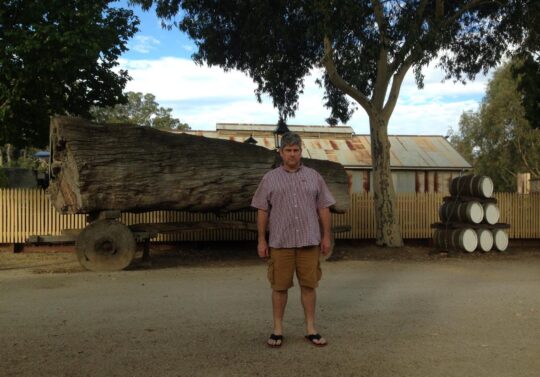
Colonial Echuca’s logging legacy
Conclusion.
“When we are healthy, we tend to be unaware of the presence of our organs in our bodies and of the functions they perform. Only when one of our organs fails and we have to replace its functions by artificial means do we become aware of how valuable and well performed its function was.
It seems to us that our attitude to the natural environment is the same as it is to our bodies. The air conditioner, water purifiers and desalination plants should make us aware of the value of the services our natural ecosystems provide us with (Constanza et al 1997 estimated the value of world’s ecosystem services as being more than double the global gross national product, remarking that in a sense it is infinite, as without it economy would grind to a halt). Yet somehow we fail or refuse to see the connection. The danger is that when eventually we wake up to it, it will be too late to stop the consequences of our abuse of the environment.
It is for this reason that we have included the issue of cultural maladaptation in our submission. Because a number of important issues, including those relating specifically to the Fraser Island’s dingo and to Bendigo region as well to the ecological reasons for rejecting COAG’s proposal for handing Federal Government’s responsibility for environmental approval to the states are covered in the two submissions to the Committee we are endorsing, we have decided not to duplicate them in our submission.
Finally we would like to draw the Committee’s attention to two books, “Legacy”(Suzuki 2010) and “Resetting the Compass”(Yencken and Wilkinson 2000, in particular chapter 13, “The four pillars of wisdom”), as they explain in a very comprehensive way the issues we have raised in our submission.”
by Stanislaw Pelczynski and Barbara Pelczynska
“ENERGETIC: Barbara Pelczynska, 78, tries her skill at skateboarding. ” Her legacy photo is one of being engaged with the contemporary young conservationist movement.
[2] ‘Submission on the Effectiveness of Threatened Species and Ecological Communities’ Protection in Australia‘, 2012-12-10, by Barbara and Stanislaw Pelczynski,
The sad euthanasic demise of our rural ‘Shaggy’ – our harmless verge May Bush (Spiraea cantoniensis).
Some hateful vindictive ‘anonymous’ incoming ex-Sydney newcomer has targeted as urban improper and complained to Council that it be killed as ‘un-urban’. Sydney urban invaders of this rural bush streetscape bullying imposing their urban dogma yet again. So, go back to high-rised mass immigration Sydney as you are not welcome in the Australian Blue Mountains!
This is the article we wrote following that nasty threat by Blue Mountains Council out-of-the-blue to attack our verge coppice.
OUR CONTRIBUTION LEGACY FOR THE GULLY: This previously thriving lush leafy Blue Mountains rural streetscape verge was before the urban hatefilled hackers Asplundh NAZIs slaughtered it in 2026. ‘Shaggy’ our May Bush to the right of the pole. Some anonymous newcomer complained to Council that it encroached the footpath (6 bloody inches!). Diddums, welcome to the leafy Blue Mountains you urbane footpath copper!
It was just bare grass when we bought in 2000. ‘Leave the place better than you found it’ – my grandfather was a farmer. Such is a core lore of land stewardship, and the scouting movement.
This was like our grass verge back in 2000 when we bought the property. Apparently as residents, we had to mow this Council verge!?! I had hayfever, so wifies had to.
The verge grass was never mown by Council, which is chronic neglect in our semi-rural residential heritage precinct. Yet Council’s cultural mindset demands without any legitimacy that residents mow Council’s verges (nature strips) outside their properties. This governmental staid one-size-fits-all pendant urbane mindset needs to change.
‘Shaggy’ our verge May Bush is shown on the right of the pole, when ‘Shaggy’ was still a blooming youngtser of Mountains character. Note the unusual reverse juxtaposition of the footpath and the verge.
We had planted this verge (nature strip) out in 2002 from what had been neglected for decades as Council’s unkempt grass lawn that they required us to mow it for bloody Council on their behalf. Bugger that for a joke! So the invasive grass went to Mars and we redesigned it mostly Native, landscaped it, kept it neat and tidy and had it maintained regularly to be safely clear of the overhead powerlines over the past 25 years. It just made sense. Council didn’t communicate a tuppenny shite. This verge design initiative provided the only shade and coolness in our street from the damaging hot summer afternoon sun (westerly left of photo) so car owners parking have long valued it.
Then some anonymous pedant from ‘big smoke’ concrete Sydney complained about wheel chair access. In our bushy area? What crap! Then someone anonymous chose to vandalise our May Bush when we weren’t home.
May Bush butchered/vandalised (6-June-2026) leaving inner branch shards for passing pedestrians to injure themselves on. Ignorant vandals, and spiteful cowards frankly! We suspect we know the culprits – very nearby hateful hissy-fitters from high-rise inner Sydney.
Give the brushcutting right angled military cut right on next door’s boundary. Mmm, we suspect these new hissy-fitting newcomers adjacent from high-rise Sydney. They’re threatened us previously with laser trimming to the boundary like the prior pollarding witch did. It’s straight of the Book of Luke.
Blue Mountains {CITY} Council’s Pyrmont streetscape vision for our Blue Mountains – “Highrise within a World Heritage Area” – just what traditional Mountains folk seek- no shade and lots of lovely concrete, NOT!
So, Council demanded that we kill our verge May Bush ‘Shaggy’ plus cut back our mature native lemon-scented tea tree, to somehow provide wheelchair access along our footpath.
This tea tree had allowed for 1.6 metre height clearance. Council: “NOT GOOD ENOUGH! THINK OF THE NON-EXISTENT WHEELCHAIRS!“
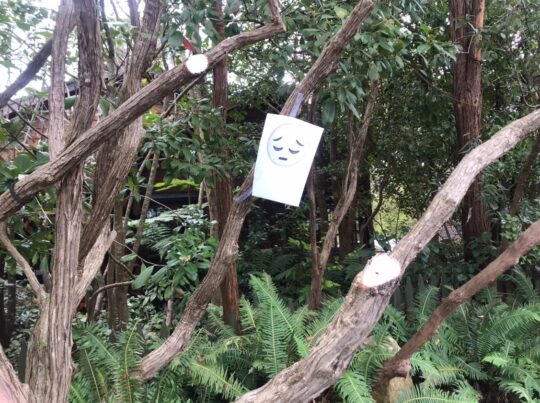
Under Council’s intimidation we yielded with resistance. Our lemon-scented Tea Tree unnecessarily lopped (our two white painted cuts) to allow for mythical giants in non-existent wheelchairs. We do play ‘spot the wheelchair’ round these rural parts. None in 26 years, like the panther! Council are pedant bullies.
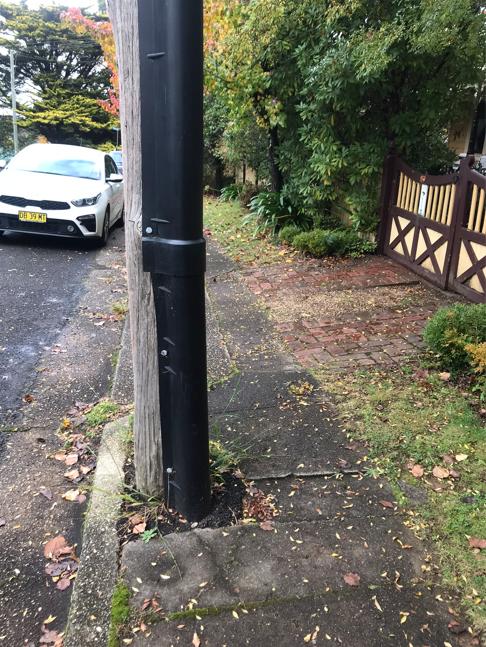
All ignoring the bloody elephant in the footpath mind you…. Try getting a wheelchair around this obstacle…
Most staff who work for Blue Mountains {CITY} Council come from concrete Sydney. They expect to convert our rural Blue Mountains into a CITY.
Our entire old 1870s-heritage residential precinct is has bugger all footpaths, and frankly it’s just the way us Katoomba locals like it – rural, leafy and bushy! We’ve never seen a wheelchair in our street or neighbourhood during our 26 years to date!
So with no joy trying to talkk to Council bureaucrats we tried to contact and complain about this bureacratic pedant urbanisation to our local Ward 1 Councillors – Cr Sarah Redshaw, Cr Suzie Van Opdorp and Cr Suzanne Jamieson. Fat lot of good that did! Their all Labor hacks! Think Labor’s mass immigration driving housing unaffordability and more Hong Kong congestion downunder.
Shame! This lot ought go back to big smoke Sydney.
Council’s ordered killing of our May Bush cost us over $800 out of pocket, including:
Us engaging a specialist contractor to remove (kill) the May Bush (our ‘Shaggy‘). | Cost: $450
Us engaging a specialist contractor to stump grind the root ball. | Cost: $200
Buying two replacement camilias with suitable fertilizers. | Cost: $180.
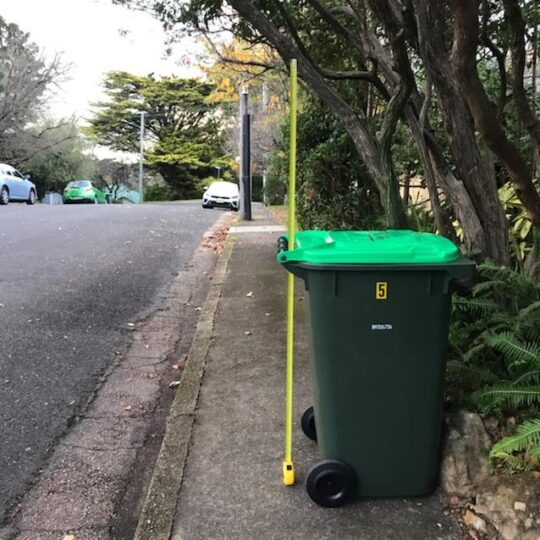
Our time and effort to then re-dig the soil patch of (1m(W) x 1m (L) x 0.3m (D) = 0.3 m3
Our time and effort to then replce the soil and landscape the rock surround and replant the verge with Camilias
This destruction supposedly to appease some anonymous newcomer nearby from obvious the city who demands a city streetscape.
Be known, we’re hereby placing a set of street CCTVs up and that anonymous individual passer-by complainant of our May Bush we again observe damaging vegetation will be up on the Internet before you can say Jack Robinson.
Just weeks later our verge it has just been decimated by ignorants of Asplundh who deserve to live in concrete treeless Penrith/Glendenning relying instead upon airconditioning. So passive solar design, eh! Go the fake Greens (socialist Reds!)
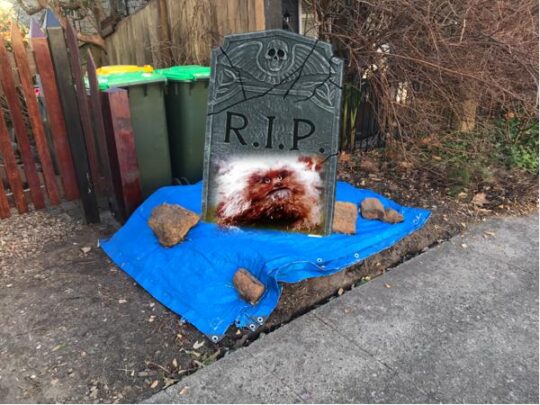
R.I.P ‘Shaggy’. Council never mowed the grass on its verge – apparently despite it being Council ‘land’. Council somhow expects residents to maintain (mow) Council nature strips. How so? So do we now concrete this going forward to abide by Council’s urbane public access agenda?
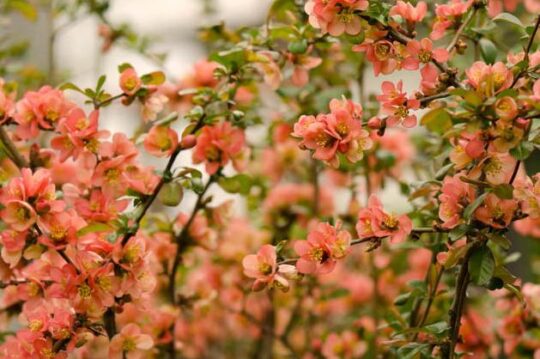
May be we plant an attractive red spiky Japanese Flowering Quince bush (chaenomeles-japonica) where Shaggy was?
The quince bush is replete with barbs like a blackberry or rose bush. Now that’s certain to scratch the bejesus out of every pedant passerby. Oh, more CCTV cameras are going up on our street lampposts too. Smile for the Internet!
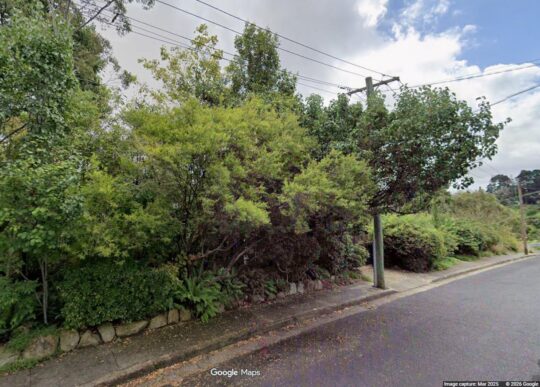
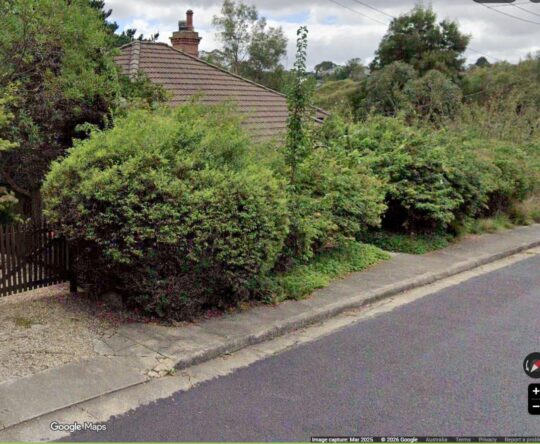
Our May Bush hedge (Google Maps March 2025). Good as a windbreak, for privacy , pet and critter (hedgerow) sanctuary, and to value add to the rural streetscape’s leafiness.
The large bush on the right was our ‘Shaggy’ – our May Bush. Being a northern hemisphere shrub it flowered in Spring with is May in the northern hemisphere. But in Australia in the southern hemisphere it flowers also in spring in October. The flowers were small white and when it was in full bloom every late October the appearance was like a giant fizzgig.
Our ‘Shaggy‘ – a May Bush, yeah but downunder blooms in October (because of different hemisphere ladies).
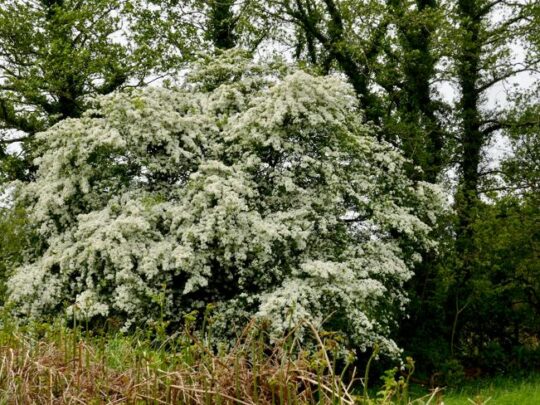
Some May Bush in full bloom in northern hemisphere springtime, apparently botanically (Spiraea cantoniensis). Whatever. From rcommendation, experience has proved since planting by one…to have thrived despite in denial to take on a bloody hardy bush robustness, fast-growing deciduous shrub famous for its cascading branches and clusters of snow-white, pom-pom-like flowers. Thriving across temperate zones (including the Blue Mountains), it blooms in spring, grows up to 2 × 2.5 metres, and is excellent for hedges or feature gardens. That’s why we chose it. An attractive zero maintenance hedge offering great privacy from the street and an excellent windbreak.
But then some anonymous urbane local newcomer to our leafy Blue Mountains (likely from inner concrete inner Sydney) complained to Blue Mountains Council that our May Bush was over-generous to the 1.2 metre (military standard?) rural footpath.
Obviously that pedant owns a pet rock and a chainsaw – a botanophobic! Given recent damage problems in our street, we shall be installing half a dozen high definition colour infrared battery CCTV cameras strategically in our street shortly, and not the cheap Chinese ones.
Compare the 2000 purchase of this (low-base) property’s scene some 26 years ago when we had just bought the property:
Perhaps Council would have preferred if we had done nothing and left our place as it was when we bought it back in 2000?
The land value would not be what it is in 2026. So Council would not be since reaping the value-adding spoils from its rate hikes from then being $772.55 annually to in 2026 being $2285.34 – a 300% lazy gain. Blue Mountains Council has for time immemorial exploited its local ratepayers, especially its NAZI1957 forced evictions of the poor locals out of the The Gully. A shameful record that Blue Mountains Council continues to culturally shun its complicity and guilt.
Some old locals never forget.
Our memory of the last of ‘Shaggy’. It flowered for us in spring, which in the Blue Mountains is October, being in the southern hemisphere.
POSTSCRIPTS:
POSTCRIPT #1: OUR REPLY TO COUNCIL’S NAZI VERGE GESTAPO
Attention: Mr Bhabuk Gajurel
Program Leader Inspections & Maintenance
Transport and Public Access (department)
Blue Mountains Council
2-6 Civic Place
KATOOMBA NSW 2780
Saturday 11th July 2026
Dear Mr Gajurel,
RE: “Pedestrian Hazard” Claim by Council – Verge in front of 5 Kundibar St, Katoomba NSW 2780 – my complaint CSR 665885
I refer to you following up my request that you and your manager Nicole Hume attend onsite inspection with your colleague Chris on Wednesday 17th June 2026. Pity you did not notify me of the timing and just turned up unannounced, and without Nicole Hume.
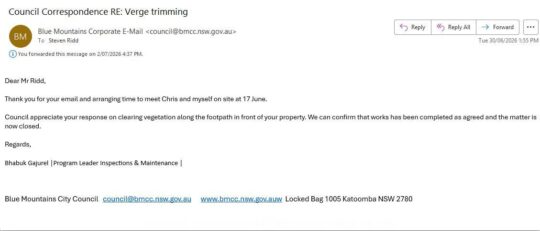
I appreciate your follow up email notification 30 June 2026 to me about this verge matter now being permanently closed by Council. (.JPG copy attached) I presume that your email is also a follow up to you conducting a second following onsite inspection of this subject verge outside my property after I had acted upon Council’s request to remove the May Bush and trim the two limbs of the Tea Tree as agreed. If so, again I was not contacted and not aware of any second onsite visit to inspect the vegetation trimming/removal.
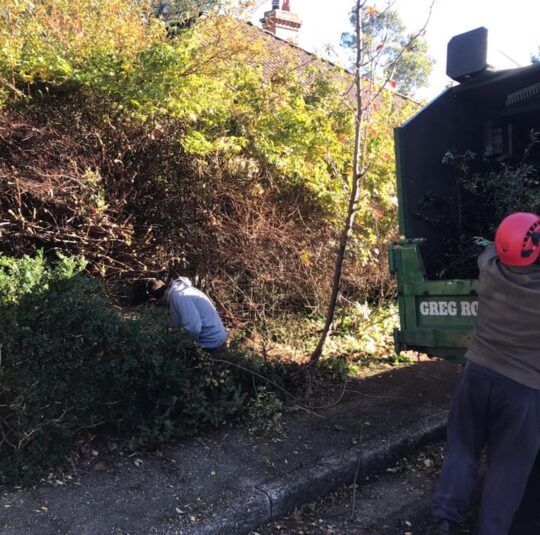
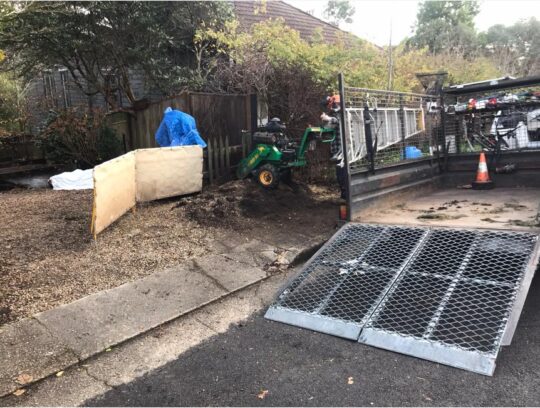
I personally trimmed the Tea Tree and also contracted Greg Roberts Trees to remove the May Bush to the stump ground level and then a second contractor to stump grind the remaining vegetation of the May Bush verge section to below ground level. I attach the relevant photos for Council’s reference. These were your agreed actions for me to undertake when you first visited.
I make the following comments to this matter:
We have done the verge trimming as Council has requested of us.
I disagree that such trimming was necessary from the outset. My residence is in a semi-bushland setting, and such military pollard trimming demand by Council I consider to be absurdly pedantic given the rural streetscape of our old residential precinct.
This residential precinct, labelled ‘North’s Estate’ dates from the 1870s and is the oldest residential subdivision in the Blue Mountains LGA. It is designated by the NSW Government as a Heritage Conservation Area.
Public access silo mentality
Our property is one of few in this North’s Estate precinct seeming lucky to have a footpath at all! Are we not bordering environmental wilderness World Heritage? We are not bloody military precinct or inner Sydney treeless “CITY”? We are not Glenmore Park nor Pyrmont!
You state in our conversations that our property was singularly targeted out by some anonymous complainant for verge trimming. May be I should try that method on someone whom I might have a personal vendetta with? And we’ve experienced a few bad apples round these parts of late. Such is the immoral manner in which Blue Mountains Council seems to have heaved in this petty one-sided matter.
You have stated in your letter of 8th May 2026 for us to trim our verge to some fabricated military type right angled precision (1.2m wide by 2m high) . Yet, whilst your letter dictated the footpath’s minimum clearance dimensions (above) you provided no by-law or basis for such. Did you just make this ruling arbitrarily in your head?
Council’s process in this matter has been a case of unwarranted ‘big brother’ bullying from on high in my opinion and its written order is anonymous so therefore baseless and unjustified.
The verge is Council property so your written threat of for Council to have otherwise do so and charge us the fee was intimidating and invalid.
It is hypocritical that Council neglects the verges it technically has community custodial responsibility for, yet ignores their maintenance – typically many such verges are traditionally grassed lawns, yet Council does not mow them, rather its expects residents adjoining to do Council’s job and at the residents’ time and expense. Council’s verge ‘trimming’ in our semi-bushland residential precinct holds an ongoing neglectful history of grass lawn mowing of its verges/nature strips. Other nearby residents have similarly complained. Our verge has not once been mowed by Council since we moved here in 2001.
Such Council neglect over the years became an incentive for us to remove the unmaintained grassed verge lawn completely. At our own time and cost we replaced the grass with a mixed native garden bed mostly of locally indigenous native species and with local sandstone landscaping. It has been since maintenance free! No cost to anyone else including Council. It has positively added new privacy, car parking shade, plus the native birds frequent the trees within.
The verge vegetation work ordered by Council has cost us personally about $1000 out of pocket for the May Bush removal associated stump grinding and purchase of replacement shrubs for this verge section.
We have chosen two white Camillias (Camellia sasanqua) to replace the May Bush and English Boxes, if this so pleases our beloved Council. May be we could receive a Council rates rebate from Blue Mountain Council promptly for this amount as compensation.
Following your letter of 8th May 2026 to us, on 6th June 2026 we first observed that someone unknown had edge trimmed a deep vertical corner section of the May Bush from top to ground. A large vertical chunk (30cm square section) was cut exactly at the border of our adjoining neighbours of 3 Kundibar Street. We received no warning or notice of this. But the trimming created a public safety hazard since May Bushes cannot be trimmed like say English Box trees since it only leaves very sharp inner branch pointy ends that pose an injury risk to passing pedestrians (unlike the soft small leaves of the May Bush exterior). Clearly we have a vandal in our midst.
We have lived at this address since 2001. Council knows me personally on its record from many past correspondences – mostly regrettable in my experience, especially in relation to this precinct, Katoomba Falls Creek Valley (The Gully).
Your initial written letter ‘out-of-the-blue’ to my letterbox dated 8th May 2026 to us was a shock, inappropriate and threatening about Council’s order for us to do pruning work itself then sending me some open ended bill charge with consequential ‘Big Brother’ legal action had I not done it myself. Such poor communication to a ratepaying resident perhaps cannot get worse. In my view you need remedial training in customer service courtesy skills, and your comment that my letter was one of 20 or more standard/roneoed letters to others suggests a lazy one-size-fits-all approach, indeed is Council heading to an AI outsourcing approach to communicate with its customer ratepayers now?
I pointed out to you and your colleague Chris on your initial onsite inspection that Council has for many years ignored repairing its footpath on the corner of Kundibar and Warriga Streets (photo attached). So Council’s personal targeting of our verge claiming fabricated and false concerns about public safety and access is completely hypocritical.
Our Council ‘Rates and Charges’ back in 2001 were annually $772.55. They have over the years snowballed to a current $2285.34 p.a. So without tempting some AI algorithm, I reckon that our average annual rates would approximate $1500. So over our 26 years to date Council has reaped about $40k out of us. Frankly, I don’t think we’re getting our money’s worth. Likely that figure wouldn’t even pay for Council’s consultants or legal fees for one month.
I am disappointed that Council and particularly the three Ward 1 councillors, to whom I escalated this matter to, have been wholly silent in response. What is the point of serving on Council or becoming a representative for your local constituents if you do nothing when constituent raises a local matter of concern?
I suggest that Council needs to apologise to us over this unnecessary petty drama and pull its head in.
I reserve the right after all this, to go similarly public again on this matter as a follow up. It may encourage other Blue Mountains residents to also express their own views about such bullying treatment as they see fit. In time the due negative publicly could implicate Blue Mountains Council appropriately well more than this petty verge matter it raised from some anonymous source.
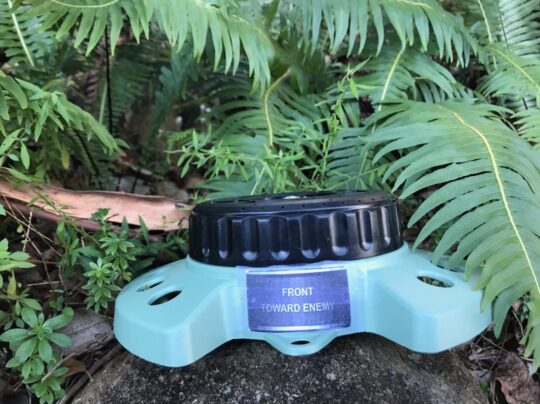
In response to Council’s intimidating letter it had dropped in our letterbox around 9th May 2026, we went out and bought a M18A1 sprinkler at the ready to defend our plot against the varmints.
Blue Mountains Council’s response:
POSTCRIPT #2: OUR REPLY TO COUNCIL’S NAZI VERGE GESTAPO
Us, being long established locals of Katoomba in the Australian Blue Mountains, suddenly ‘out-of-the-blue’ last week we received a threatening letter from Blue Mountains {city} Council in our letter box, which included four colour photos of the front of our property and complaining and threatening us.
We’ve always paid our rates but for the last 26 years since we bought here!
Council’s obscure written threat to us, and it’s apparently just us alone, no-one else its seems accusing us of…
“obstructing pedestrian passage, wheelchair use of the footpath and creating a safety hazard for pedestrians“
Seriously, Blue Mountains Council?
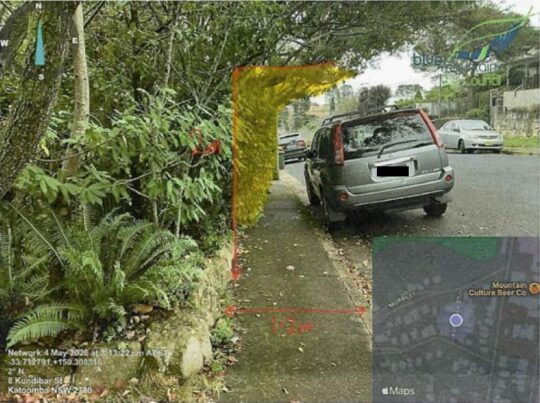
This telegraph pole stuck in the footpath outside our place certainly ain’t ours. We didn’t put it there, and actually it was there when we bought back in 2000 and moved in in 2001. Whatever, this residential area is old, really old! Let it be! We value heritage. Yep, agreed that pole might meet Council’s freshly advised issues of 8th May 2026 stated above like “obstructing pedestrian passage, wheelchair use of the footpath and creating a safety hazard for pedestrians“. Yet our verge is to the right. Pole ok, side verge not? Council hypocrisy or what?
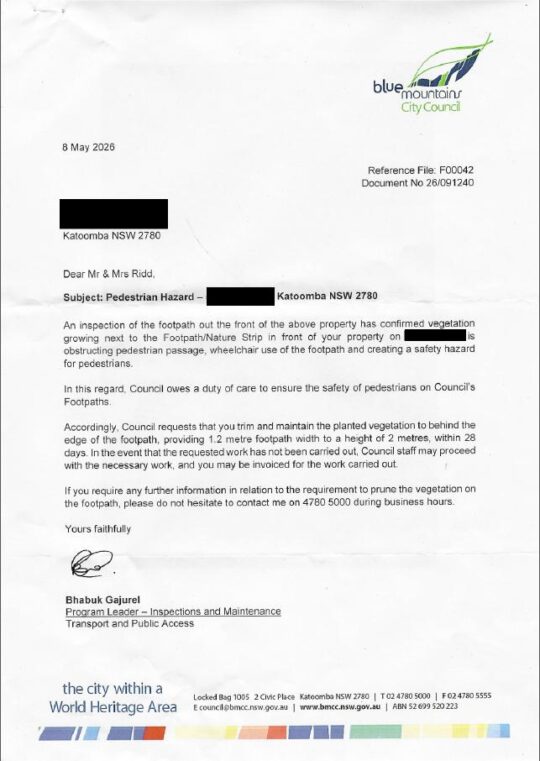
So, the following is an extract of that intimidating letter from Blue Mountains Council addressed to us in our post box. Its 3-page letter has photos of our verge. It is dated 8th May 2026 and arrived in our letter box the following Tuesday 12th May 2026, one of the regular weekdays that our post arrives around our old neck of the woods.
Mmm this is dodgy. Some initial thoughts by us:
Council’s inspection of the footpath – initiated by Council bureaucrat NAZIs?
The footpath “is obstructing pedestrian passage, wheelchair use of the footpath and creating a safety hazard for pedestrians.”?
“Council owes a duty of care to ensure the safety of pedestrians on Council’s Footpaths”? Since when ever?
“Council requests that you trim and maintain the planted vegetation to behind the edge of the footpath, providing 1.2 metre footpath width to a height of 2 metres, within 28 days.” Why such military paratmeters? What Council by-law specifically applies?
How’s this threat by council bureacrats: “In the event that the requested work has not been carried out, Council staff may proceed with the necessary work, and you may be invoiced for the work carried out.”
The Council bureaucrat’s love and kisses closure sentence: “If you require any further information in relation to the requirement to prune the vegetation on the footpath , please do not hesitate to contact me on 4780 5000 during business hours.”
So, something ratty bloody smells, something is definitely going on. Why after 26 years this crap threat out-of-the-blue? The letter is unannounced and targeting just our property, but no one elses and is misguided, unreasonable, non-communitate and contains a vandalistic and financial threat. Does council pose some clandestine ulterior motive here? What is the source? Is it spiteful? Is it politically motivated?
Blue Mountains Mayor Greenhill and GM Dillon what is going on? Fix your own backyard and leave our law abiding ratepayers alone in this 1870s heritage listed North’s Estate precinct in The Gully alone for Christ sake!
Blue Mountains Mayor Mark Greenhill and Council General Manager Rosemary Dillon on public lands of Katoomba Golf Course that went bankrupt twice. This despite Council in many closed-door club-sandwich meetings misappropriating ratepayers’ revenue for dodgy funding schemes over years to try to bail out the golfing pie-in-the-sky misadventure. Who plays golf these days? [We hold full records of the goings-on since 1989l.
Meanwhile, here’s below our footpath in one of Council’s four included photos of its letter (taken without knocking on our door nor asking our permission. Indeed, one of the four photos exposes our car registration – nice unethical compliment Council desk jockey!
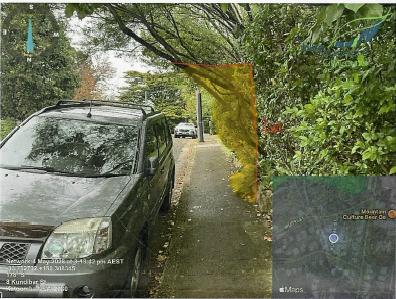
Council’s photo: our verge, not perfect, but cleared and maintained and trimmed regularly (by us) and so is walkable through. We’re Mountains right – lots of valued vegetation in these hills. The footpath has always been 1 metre wide, not Council’s imagined pedant 1.2 metres. The photo’s bottom left text overlay records an Apple Mac GPS co-ordinates and a wrong address – Council exploiting AI?
We at The Habitat Advocate don’t muck around dealing with government threats and hypocrisy….
The heritage streetscape ain’t standard round these parts, as this old preceinct dates back to the 1870s. For instance, our verge and footpath are nonstandard, since the verge and footpath are in reverse justaposition to modern streetscapes. But this is the heritage Blue Mountains for you and most locals like it the way it is, including this author.
But hey Council, what of the telegraph poles in the footpath outside our place in the same locale? Is someone complaining about wheelchair access around them as well? Is Council planning to have Endeavour Energy put the power underground? This author did just that years ago at some considerable personal cost of $6000+.
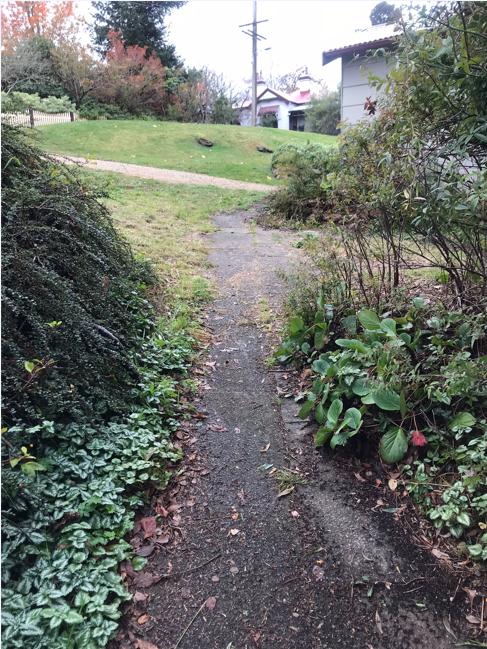
Elephant in the footpath! Yeah but, one of three telegraph poles imbedded in the footpath, this one directly outside our residence in our small residential street on our side of the street. Note a second pole similarly in the distance. Council’s photographer missed the elephant in the room – a friggen big telegraph pole in the middle of the footpath clearly obstructing “wheelchair use”, or so imagined. We didnt put it there, but we accept what has been there before us in 2000.
Try wheelchair use through a telegraph pole in the footpath outside our front Council! Try getting your nominal wheelchair around these pole obstacles. In the 26 years we’ve lived at this address in Inner West Katoomba we’ve never observed a single wheelchair in our street, dudes! The Mountains rural landscape ain’t extactly wheelchair friendly for the most part. So how conjured a fabricated justification to hatefully bulldoze our verge and how bloody bureaucatically hypocritical?
Much of the Blue Mountains has no footpaths anyway, certainly not in our old 1870s precinct. This is not contemporary new urban Sydney.
This photo is emblematic of our heritage residential area which we locals cherish along with most who chose to live in this historic quiet precinct. Spot the concrete footpaths in this photo just around the corner from us! If blow-ins want concrete wheelchair footpaths, bloody go back to urban highrised Sydney’s big smoke and leave us rural folk in rural peace!
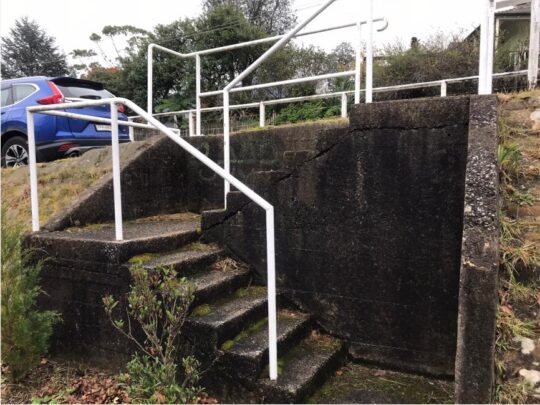
Council’s “wheelchair use of the footpath” just a street away, so give over! Now frankly, one is not bothered by this 19th Century so we’re happy to let it be. It is heritage streetscape just like the white timber fencing behind. Why then does Council suddenly seem to have some new Orwellian vision to try to make our traditional rural Blue Mountains resemble the likes of say Inner Sydney’s Pyrmont? Are we to fear to next expect elevators installed at great expense to replace the likes of these pedestrian steps? Council, give us a break!
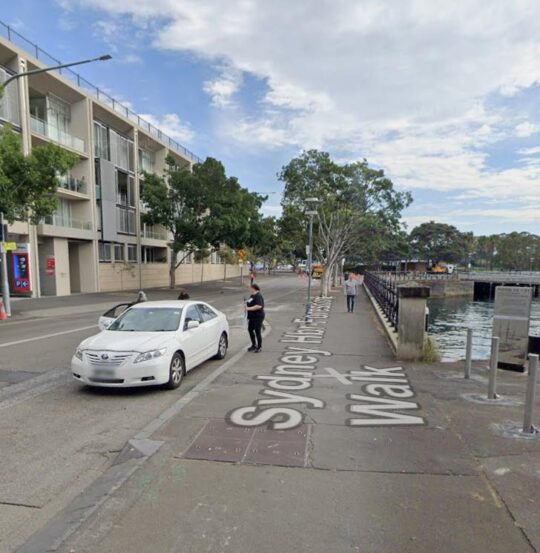
Inner Sydney’s Piranha streetscape of Pyrmont. A tad different to the rural Blue Mountains? No deforestation contracting for Asplundh here but
Council’s very ignorant letter comes from some new blow-in unknown Council office-bound staffer whom we have never heard of, one Bhabuk Garurel.
He needs to get out more and realise the reality of where he is, and it ain’t 2026 newly developed urban Sydney. Council’s letter represents some imagined rule out-of-the-blue threatening to destroy our bush verge. It avoids any prior consultation or explanation by some desk jockey up in Council’s highrise brutalist taj mahal remote from the town community.
This is a shock after 26 years here with no issue. So I phone back this character, Bhabuk Garurel, a Nepalese name as it turns out and I leave a few messages for him to call me back! He does so and claims the matter is a Council initiated inspection. But this proves false when I then speak with his manager Nicole Hume, who says someone (anonymous) has apparently complained. So the truth emerges.
Here we reside in the oldest heritage residential area of the Blue Mountains. The North’s Estate streetscape is over 150 years old, like from the 1870s.
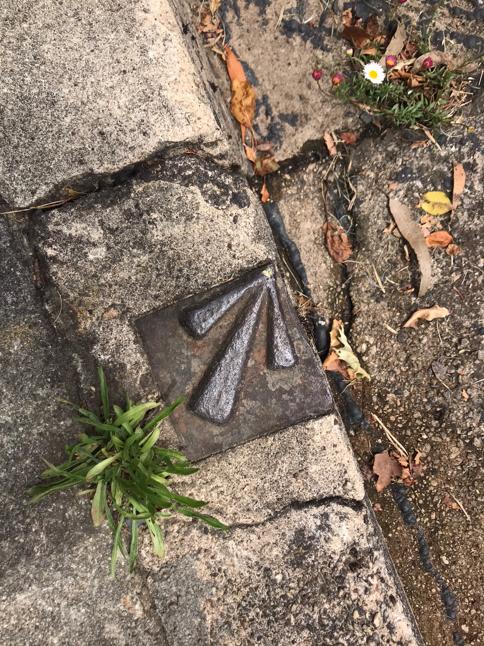
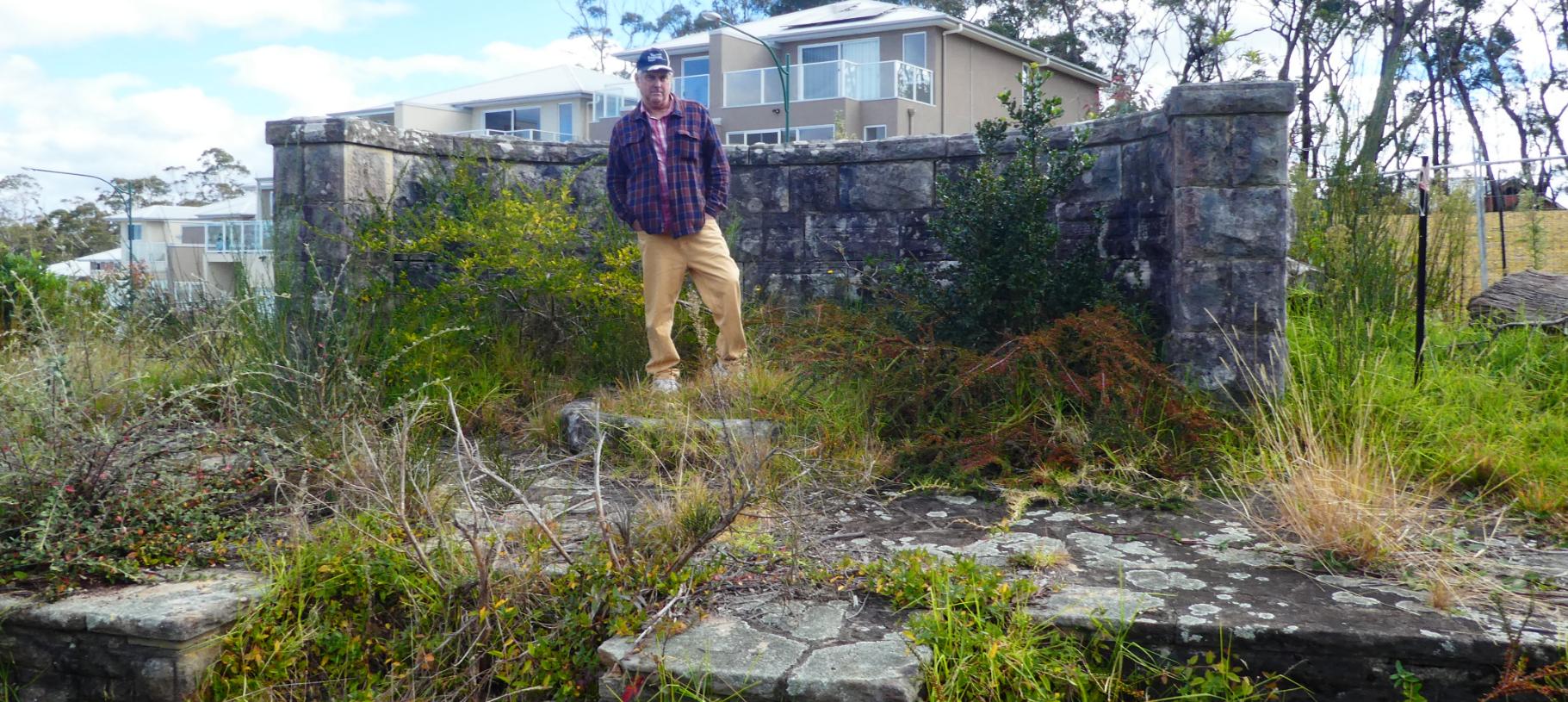
A heritage 19th Century convict-shaped genuine iron survey mark in the local gutter.
Outside our place there’s the previously shown electrical telegraph pole planted in the footpath obstructing pedestrian access and it has been there for decades and frankly we dont have a problem with that; it’s long a Mountains thing.
We have not ignored this unjustified impost and threat, and have since lodged a formal complaint and we’ll fight this politically, publically and indeed legally if needed. Council’s CSR is 662 939 – for whatever that means.
We have since responded to Council bureaucracy on this matter not only three times by phone, but now in writing as follows (and we’ve only just started!):
15th May 2026
Attention: Bhabuk Gajurel
Programme Leader – Inspections and Maintenance
Transport and Public Access
Blue Mountains Council
I acknowledge receipt of your hardcopy 3-page letter dated 8th May 2026 received in our letterbox to us at XX XXXXXXXXXX Street Katoomba on Tuesday 12th May 2026;
I attach a scanned copy of that letter for your reference;
I reject Council’s claims and demands in that letter utterly, thus we are in dispute with Council in this matter;
The photos you attach which are in colour and have a edited colour shading, show that the verge vegetation does not obstruct pedestrian access, save for one May bush;
The imbedded text on the bottom right of each phone lists the incorrect address across the street. Was this an act of AI and that of an ignorant Council staffer desk jockey?;
Why has Council chosen not to contact us to discuss rather than issue an ultimatum with costs. Do you want us to take legal action against Council? Is this how you treat residents?;
Safety warning: If Council were to trim that May bush back to the western edge of the footpath, it would reveal the sharp small horizontal branches of the bush within and this would pose a public safety risk;
I request you, Bhabuk Gajurel, and your manager Nicole Hume, make time to personally inspect this verge onsite at a mutually suitable time so we can discuss options and the unique rural locale. This is not urban wheelchair-friendly Sydney, from which you may emanate. This is not concrete and treeless modern urban downtown Pyrmont. We are in the rural Blue Mountains and it ain’t no city!;
Please observe that this particular residential street has its footpaths and verges along both sides of the street in reverse juxtaposition to modern streets, that is the verge butts up again the residential properties and the footpaths are adjacent to the gutter of the street;
The street dates back to the 1870s. It is an historical part of North’s Estate and is conservation heritage listed. This century old residential/bushland precinct area is not 21st Century Pyrmont with its best practice streetscape compliance to suit disabled pedestrian access. So get real!;
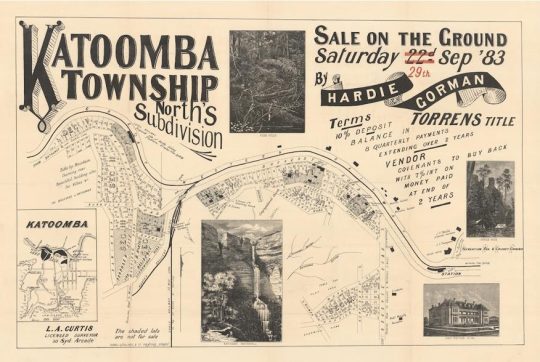
Have you any knowledge of the conservation heritage listing of North’s Estate of the 1870s here? Have you ever heard of North’s Estate Heritage Conservation Area (Local ID: K171)? It holds both local and State significance! Do you have any qualifications or training or experience in conservation heritage areas? The following newspaper advertisement dates to 1883, not 1983!;
Council’s photographed tea-tree on the verge diagonal branches allows for clear passage for pedestrians of a 6’ height. Yet 7’ dudes may have to duck a bit. Acknowledged, it is not perfect, but if you care to inspect closely onsite away from you Council desk, you will note evidence of our pruning of this tree over the decades. It actually was a lot worse and so we have regularly trimmed it since we do respect the right of passage of pedestrians along the footpath;
In your letter, your claim that the verge vegetation is “obstructing pedestrian passage” is false and misleading, save for that May bush;
In your letter, your claim that “wheelchair use of the footpath” is required is absurd. You are being hypocritical here because you conveniently are ignoring “the elephant in the room” – the three telegraph poles on our side of this short street have for many decades been planted in the footpath. So how do you suggest a wheelchair avoids these poles? If you want to destroy our verge then remove the poles so you achieve wheelchair access perfection for your nominal and unsubstantiated 1.2m (W) x 2m (H) parameter wheelchair access idyllic bliss!;
But hey, I have only just started. A short walk around this old rural precinct will reveal to the newcomer that actually Kundibar Street is one of the better served for pedestrians. Many streets have no bloody footpath at all. So why target us? Are we to be a precedent for Council’s heritage destruction of this 1870s Norths Estate by some city-slicker Council envisaging some urban pristine wheelchair-friendly paradise in its imagined “City within a World Heritage Area”?;
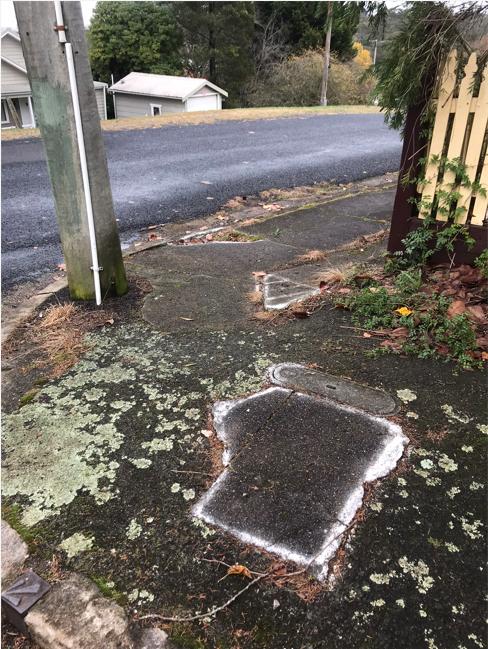
In your letter, your claim that we are “creating a safety hazard for pedestrians” is false and misleading. There are no trip hazards on the footpath outside our property. Indeed you can observe evidence of the concrete repairs that I have made to the old gutter and to around the electrical telegraph pole situated directly in front of our place in the footpath itself! Compare this with the broken footpath next door that Council has ignored for years. It indeed poses an ongoing trip hazard for pedestrians, yet all Council has done is spray white paint to alert pedestrians;
In your letter, you claim and seek to justify that “in this regard, Council owes a duty of care to ensure the safety of pedestrians on Council’s Footpaths.” Seriously, take a walk around our immediate residential precinct (and many areas of the Blue Mountains dude!) It is a celebrating in Council’s systemic and chronic neglect of streetscape maintenance and amenity. But frankly in this neck of the woods we rather like it to be a bit rural and rough and ready. We don’t want to be a suburb plush with thousands of concrete footpaths on every street side;
I will not trim anything without Council’s prior written agreement to the extent of that trimming and with Council’s authorised senior representative as an onsite witness. Video footage will be done for public dissemination. I am flexible to reasonable trimming, but not to wanton unsupervised destruction by outsourced non-Council contractors. They might cop a sprinkler or two;
Any destruction of our verge vegetation will incur a cost penalty to Council by invoice to replace same. That cost will likely be more than Council’s bullying threatened charge for it to “proceed with the necessary work , and you may be invoiced for the work carried out.”
I do not tolerate threats.
Yours faithfully,
Steven Ridd
Property Owner
North’s Estate since 1876 (Inner West Katoomba, Blue Mountains, Australia).
Attached relevant photos of the North’s Estate:
Meanwhile, for those unfamiliar with Inner West Katoomba’s heritage listed North’s Estate, check out Council’s hypocrisy and streatscape neglect of it… (all our photos)…
The second telegraph pole in the same footpath, blocking 21st Century wheelchairs?
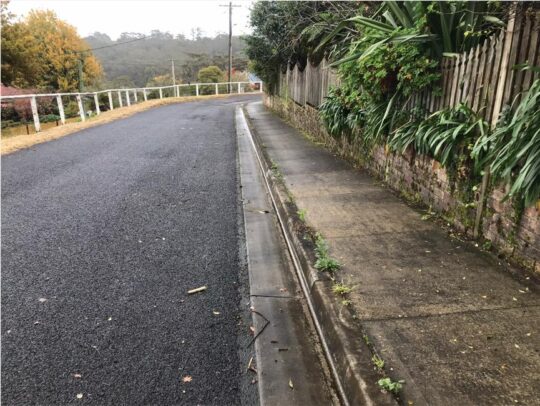
Blue Mountains Council hypocrisy – same footpath that has been neglected by same Council for decades, posing a pedestrian hazard or what? Just white painted ove the raised broken concrete edging instead of being repaired by “duty of care” Council.
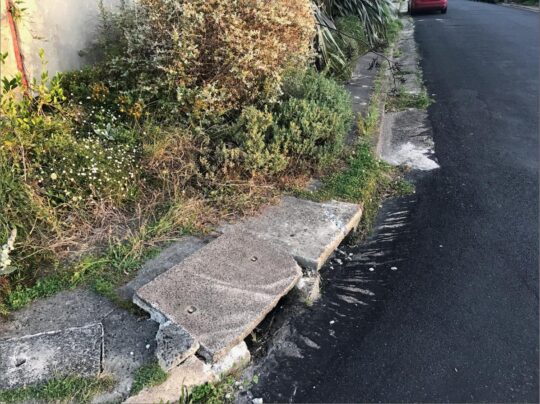
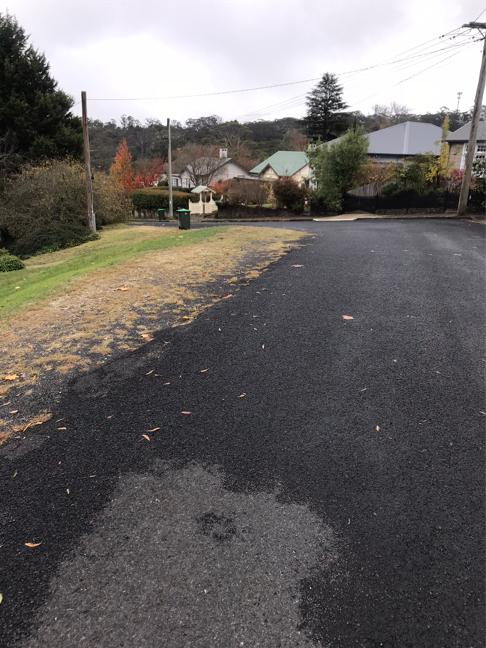
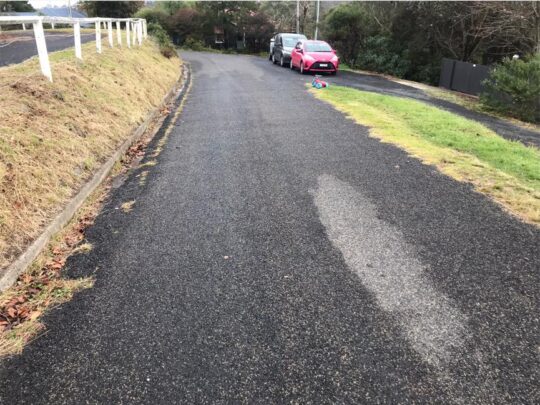
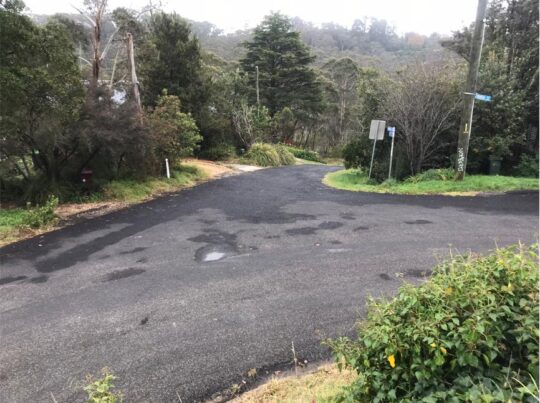
Same street “duty of care” Council – corner of Murri and Kundibar Streets. This one has been repeatedly driven over by Council’s outsourced JJ Richards contractor doing its weekly recycled household waste collection. The truck driver can’s seem to take the left corner – probably texting on his mobile phone. He did the same thing deliberately on the nearby verge on the corner of Kundibar and Pine Streets.
And a street away, this century old wall has long been neglected by Council. What’s new?
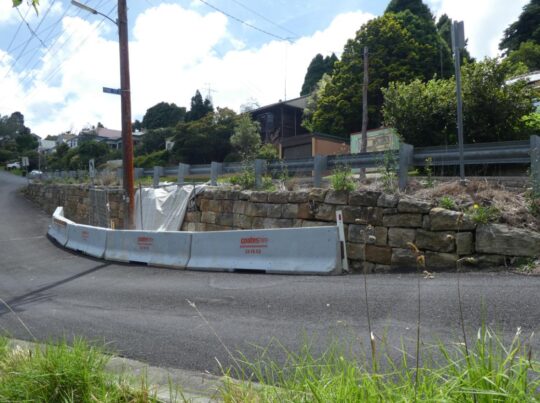
Blue Mountains Council heritage care factor zilch! This old sandstone retaining wall supporting Cascade Street above intersecting Pine Street below. Chuck some tarp over it and crash barriers and she’ll be right eh? Just like Megalong Road all over!
Adjoining street. No footpath at all, but that’s just fine in 1870 North’s Estate! Locals haven’t ever minded the rural streetscape. Is some petty-minded newcomer from urban Sydney complaining about this too?
Adjoining street. No footpath at all, but for long time locals that rural streetscape is just fine in this historic 1870 North’s Estate! Is some petty newcomer from urban Sydney complaining about this too? Go back to Pyrmont!
Adjoining street. Ditto! No footpath at all, but that’s just fine in 1870 North’s Estate! Is some petty newcomer from urban Sydney complaining about this too? They should go back to the big smoke!
Adjoining street has this verge garden and a rural foot track. Is some petty newcomer from urban Sydney complaining about this too? Does she/he/it want it concreted like Sydney?
Council’s recent new footpath around nearby Warriga/Waimea Streets made wider. Yet why? The original footpath had absolutely zero flaws! The job was corrupt conduct between Council and local concrete contractor Metromix.
Whilst Metromix was supplying the concrete for Council’s unnecessary footpath upgrade (costing how many ratepayer thousands?) the Metromix cement mixer driver managed to destroy a safety barrier close by up the same Warriga Street.
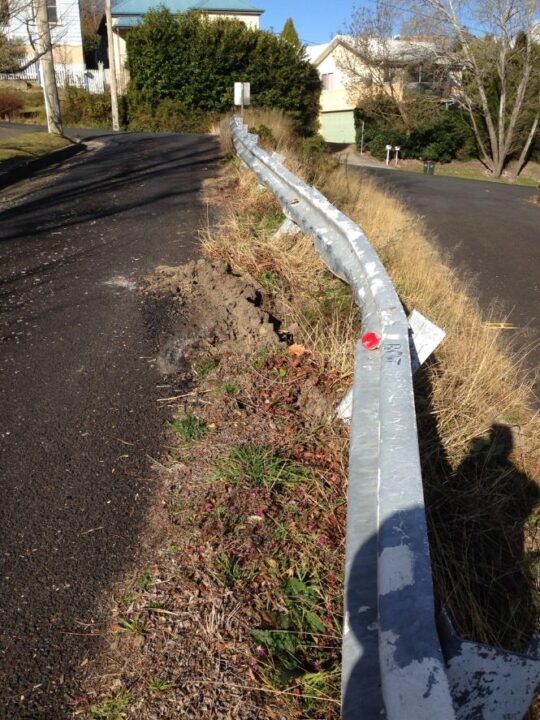
Warriga Street Katoomba – crash barrier damaged CSR 291786: Quote from one’s email to Council of 2nd August 2019:
“Attached are photos of the crash barrier damage on Warriga Street, which occurred today between 11am and 12:30. The road is unsafe. There are two or three steel vertical posts that have been dislodged.”
The Metromix concrete mixer truck damage to Warriga Street. Driver texting?
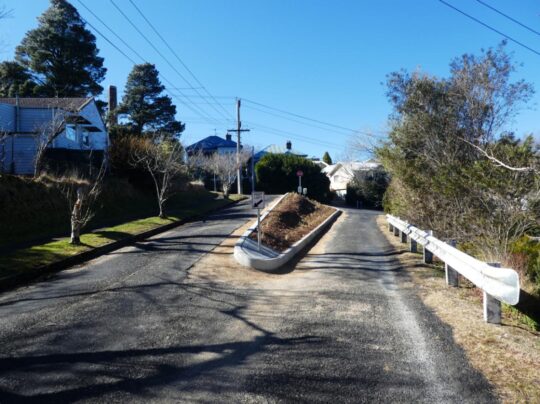
Surprise surprise, Metromix then got the plumb job of supplying truck loads of concrete for Council’s new fangled concrete island replacement. Check this photo of 6th August 2021 out…
A nice little earner for Metromix – nudge nudge, wink wink. Nice and heritage looking, not!
But that’s Blue Mountains {city} Council for you. Worst council in Australia. Council’s Motto: “A Sydney city envy converting Blue Mountains heritage – natural, historical, everything!”
Back to our verge – Council’s photo to have natural bush verge squared away like its some military parade ground? A city pedant mindset with a world heritage area propaganda hypocrisy.
Council’s sheltered workshop silo mentality blow-in foreigners dumped in positions of Inspections and Maintenance – unqualified, and inexperienced. No local knowledge. No heritage training. No skills in communications. There you go – Council form for pissing off local ratepayers yet again!.
The term ‘State Significant Development‘ is a blatantly corrupt authoritarian overreach against due process and democracy!
It is a politically bureacratic term apparently unique to the New South Wales Government’s Planning Department. Some years ago, the term was conceived as a legal process to enable the NSW Government to overrule planning rules, zoning, and residential democratic rights of elected local councils across the State of New South Wales. It well could be equated to a policy out of the dictatorship of China’s Communist Party’s manifesto in Beijing.
“The NSW State Significant Development (SSD) pathway, which manages projects of state importance under the Environmental Planning and Assessment Act 1979, was formally gazetted and started on 25 May 2005. This policy consolidated previous, varied planning instruments to create a unified assessment process for major projects.” [SOURCE: Google AI, whatever that means]
We note that Labor’s Premier Bob Carr Robert John CARR was in power at the time (4 April 1995 – 3 August 2005); so this was a Labor Party policy from the outset.
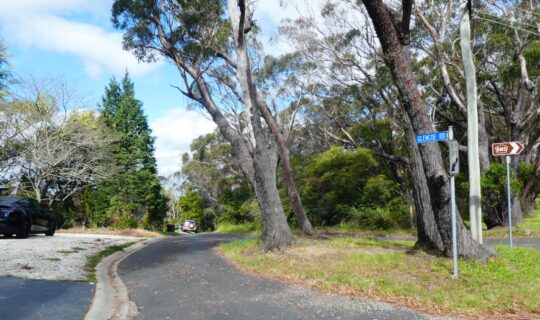
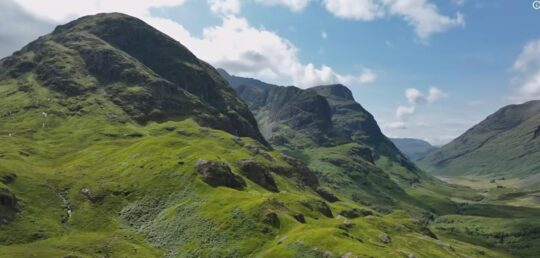
In this particular matter, there remains a wee remnant natural bush block at the edge of The Gully (west Katoomba) remnant alongside a small side street termed by someone, perhaps of Scottish ancestry not unlike this author, named ‘Glencoe Road‘.
Glencoe Road, Katoomba (Blue Mountains in Australia). The natural bushland on the right is proposed to be completely bulldozed to make way for an invasive highrise condominium for a 200+ bed Chinese-only student college (aka ‘backdoor immigration’).
VAST WILDERNESS !
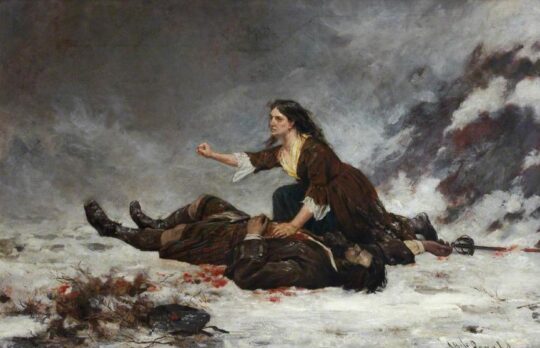
Non-Scots and those of non-Scottish ancestry (unlike this author of 42% ancestral Scottish DNA), will likely have no idea of the historical tragedy, significance, nor immense sadness the name ‘Glencoe’ resonates with those who do so. We know not of where or whom came up with this naming of this side avenue as such but as perhaps a gesture of tribute to the memory of that barbaric betrayal and Scottish massacre of 1692.
But do any read history these days, so it may not be repeated? Glencoe Avenue so named is situated in the outer west of Katoomba, just walking distance from where one lives, and named likely many decade ago (by whom one wonders?).
This latest highrise monstrosity Sydney urban has been proposed out on our World Heritage doorstep:
Does Sydney’s NSW Government culturally regard the entire state of New South Wales to be its outer urban Sydney urban right out to bloody Broken Hill and Tibooburra? Macquarie Street has recently morphed its Sydney Water utility department into WaterNSW – implying one might be somewhat on to the urbane polly globalist bastards! Governor Lachlan Macquarie (indeed a Scot) in 1815 ventured out west to now Bathurst and had his name enshrined on the Macquarie River there. Nothing friggen changes.
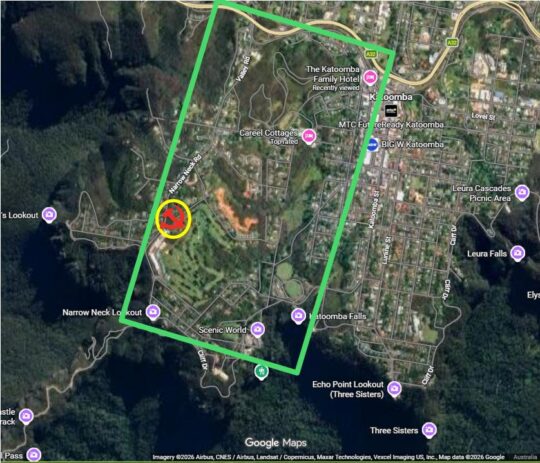
The following is an aerial map of the proposed highrise development site location situated on the western edge of the regional township of Katoomba on the Blue Mountains central plateau, aurrounded by World Heritage forests. Note our superimposed yellow circle of the development site (currently intact bushland). Our added larger superimposed green rectangle on this aerial map indicates roughly the natural water catchment area of Katoomba Falls Creek Valley (encompassing ‘The Gully’), as situated above Katoomba Falls – which is labelled to the south.
Katoomba in the Blue Mountains of Australia. This aerial photo map is superimposed by our two shaped references; one in yellow (the proposed highrise development site) and one in green (the natural water catchment of Katoomba Falls Creek Valley flowing to Katoomba Falls as indicated. [Map Source: Google Maps – aerial view]
Why the hammer and sickle China Communist Party logo in this image above? Well, there is every indicating that this massive highwrise development is for a foreign college, and mot likely for purely Chinese immigrants on the pretence of being a student campus with 200+ bed studio accommodation, education facilities and a canteen. Hello! We didn’t come down it the latest rain shower! Consider the nearby Leura ursupation off Scotts Avenue by a Chinese-only students campus accommodation!
Probably the Scottist heraldic Campbell clan of yore would choose to forget the name ‘Glencoe’. One’s proud Scottish ancestry of the MacEwan clan, know the uncomfortable truth of Scottish history associated with Glencoe, a remote ancient village in Scotland located nor far from the town of Fort William, Scotland. Look it up!
‘Glencoe, 1692’. Painting by John Blake MacDonald (1829–1901), Royal Scottish Academy of Art & Architecture.
[6] ‘The Part 3A system for assessing major projects was repealed in 2011.1 Major project assessment has since been replaced by two separate assessment pathways‘,
"We're coming to you from the custodial lands of the Hairygowogulator, Tarantulawollygong, and Longdrop country, within the Australia nation since 1901. From our home in Inner West Katoomba we pay respects to uncles and grandaddy elders past, present and emerging from their burrows. So wise to keep a distance out bush."
Recent
Supporting Us
A VOICE FOR NATIVE HABITAT
One’s solo mindful walk…
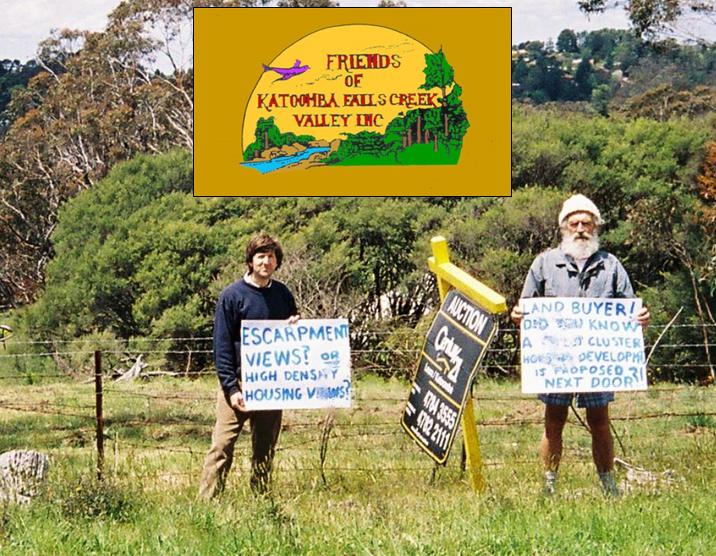
The Friends of Katoomba Falls Creek Valley Inc. in The Gully
The Gully Collection
Save Atlas Campaign
The Friends Archive: War and Peace with the Blue Mountains ‘hysterical’ Society



 Loading...





 Reload document
  Open in new tab